THOUSANDS of farmers from across Spain staged a protest in Madrid after the EU struck a landmark trade deal with a bloc of South American nations.
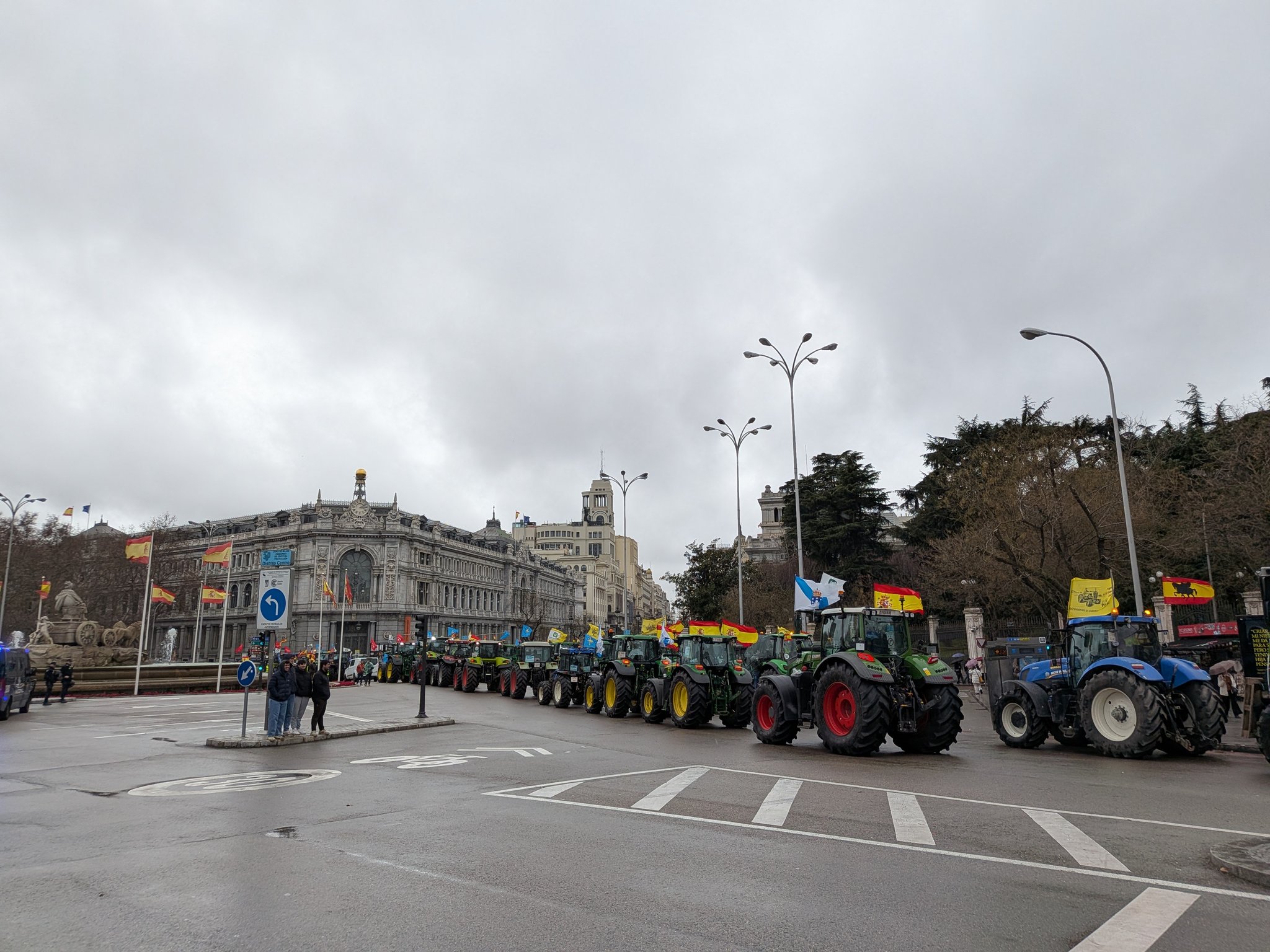
More than 350 honking tractors rolled down the capital’s main thoroughfare, Paseo de la Castellana, as protesters waved placards reading ‘the Spanish countryside is not for sale’ on Wednesday.
The 2,500 demonstrators ended their march in front of the Ministry of Agriculture, as traffic slowly resumed following an hours-long standstill.
The organisers were voicing anger over a historic free trade deal signed between the European Union and the Mercosur bloc, which includes countries such as Argentina, Brazil, Paraguay and Uruguay.
Protesters argued that the agreement, signed last month after two decades of wrangling, would bring ‘lower-quality products’ to European consumers and ‘harm fair competition’ in Spain.
“We will lose food sovereignty, there will be no competition,” said Miguel Angel Aguilera, president of Spanish agricultural organisation Unaspi.
The pact, which still requires approval from the EU Parliament and the union’s top court, would allow the EU to import agricultural products and minerals from Mercosur countries at low tariffs, while European nations could more easily export machinery, chemicals, and pharmaceuticals to South America.
Spanish farmers, however, fear they will struggle to compete with the lower prices of agricultural imports from the Mercosur bloc.
Protester Justo Ortiz Trapote told Bloomberg: “We are not against competition, but we want food products produced in other countries to be produced under the same conditions that are required of us.”
Prime Minister Pedro Sanchez told parliament the deal was ‘extraordinary news’ for Europe – but also promised compensation for affected farmers, adding imports would be restricted if domestic producers were harmed.
In recent years, far-right party Vox garnered support from Spanish farmers after repeatedly slamming Sanchez and his socialist party, PSOE, over their perceived inaction in protecting the agricultural sector.
READ MORE: A new ally next door for Pedro Sanchez after Portugal elects socialist as president
The trade deal could allow shoppers in Spain to save up to 30% on products such as beef, poultry, and sugar, according to economists’ estimates.
However, Spain’s Federation of Consumers and Users (CECU) has warned that some South American imports may be produced under less stringent food safety regulations, potentially posing health risks for consumers.
While certain Spanish products, including olive oil and wine, could benefit from expanded export opportunities, other staples such as locally produced meat and honey may face greater competitive pressure, which could gradually reduce consumer choice.
Farmers in countries including France and Poland have also staged protests in recent years, voicing concerns similar to those in Spain that the agreement could undermine parts of Europe’s agricultural sector.
Click here to read more Politics News from The Olive Press.