

COSTLY rescues could soon leave reckless swimmers footing helicopter bills of €2,000 an hour under a new Canary Islands law
The Canary Islands Government has announced it is drafting a new Civil Protection and Emergencies law that will introduce fines for rescue operations triggered by reckless behaviour, following recent fatal and high-risk incidents in the archipelago.
The measure was confirmed on Wednesday by the Director General of Emergencies during a press conference outlining how the proposed sanction model would function.
“We understand that the reckless person has to pay the fine. It’s not about penalizing someone who has fallen, but about recklessness,” he said.
He specified that this includes “a water accident when the red flag is in effect or entering an area closed to swimming”.
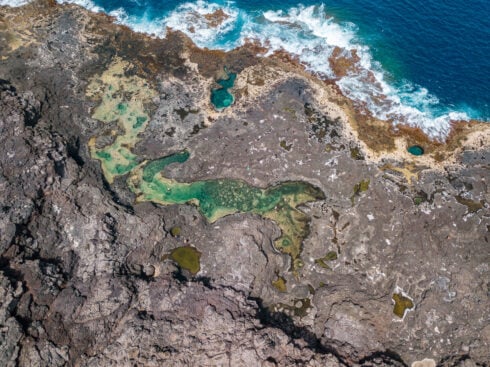
The announcement follows a recent incident in Los Charcones in Lanzarote and another on the coast of Tenerife in “a pool marked and signposted” due to a closure for coastal phenomena alert.
READ MORE: Helicopter search and rescue finds man lost in mountains near Nerja
By Naeblys
“That is reckless” and the cost of the rescue “is high” because “it depends on many factors,” he asserted.
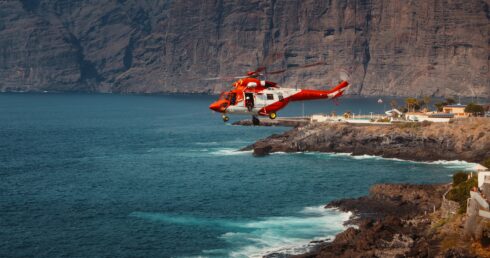
According to the 2012 figures, “an hour of helicopter service costs 2,000 euros,” he said as an example.
The Director General also acknowledged administrative difficulties in applying sanctions under the current system.
As he pointed out at a press conference, at this time there are “several problems with the registration of the rescued people”, since those who rescue them “are not civil servants, but rather employees of the company that provides the service” and, therefore, “cannot open the file to register the rescued person”.
Emergency officials have also warned that there are “multiple accidents, with several people affected and even missing persons”, which means “activating a search operation that can last up to a week” and that “has a price”, because “emergency situations are not free”.
READ MORE: Paragliding tragedy leaves tourist dead off coast of Spanish holiday island
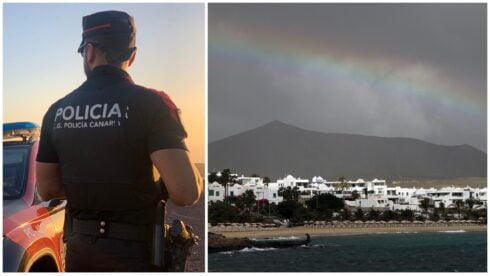
The government now intends to involve the Canary Islands Police so that rescued individuals can be formally identified if negligence is proven.
The proposed law remains in development but signals a tougher stance on dangerous behaviour across the Canary Islands’ coastline.
Click here to read more Canary Islands News from The Olive Press.