
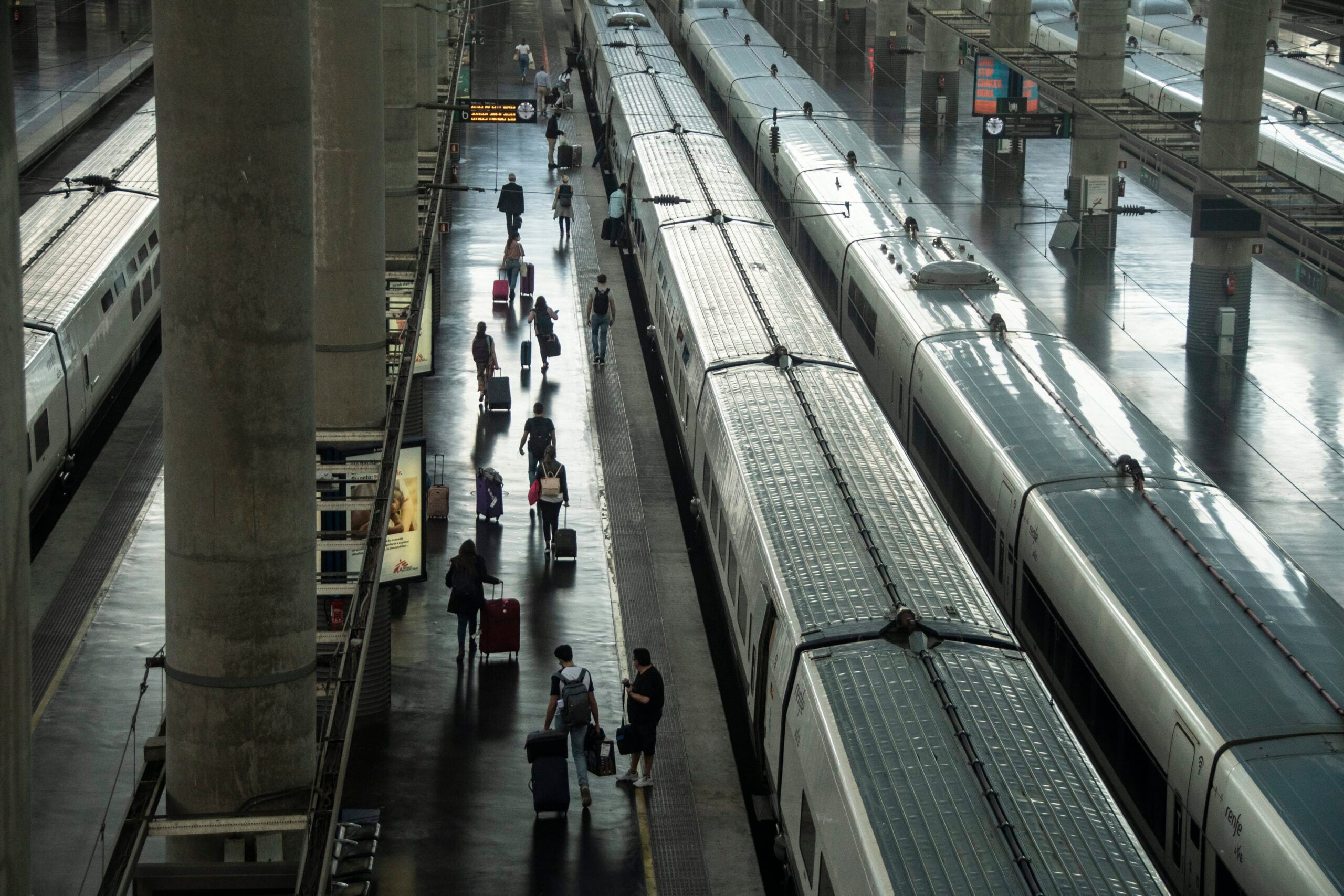
SPAIN has become one of the EU’s lowest spenders on railway maintenance, with investment per passenger falling by more than 25 per cent since 2019.
The country now ranks behind only Croatia and Slovakia in railway maintenance spending across the bloc, according to a report by the Institute of Economic Studies (IEE).
The gap with Europe is stark.
Over the past five years, Spain has invested €45.5 million per 1,000 kilometres of track – well below the EU average of €80.6 million.
Since 2013, this has translated into a €3.6 billion shortfall in maintenance investment.
At the same time, demand has surged.
Passenger numbers have more than doubled, rising by 100.8%, yet maintenance spending per passenger has dropped by 27.5% over the past decade – from €11.7 to €8.5 – particularly on high-speed services.
To close the gap with the EU average, Spain would need to increase maintenance spending per kilometre by 77 per cent, requiring an additional €596.7 million.
The IEE warns that this spending gap is already taking a toll.
“Insufficient maintenance ultimately hinders the productivity of the Spanish economy as a whole.” the report says.
Overall investment in rail infrastructure also lags behind.
Between 2019 and 2024, Spain invested €129 million per 1,000 kilometres of track, compared with an EU average of €176 million – 37 per cent higher.
According to the IEE, this spending deficit could result in the progressive deterioration of infrastructure, increased journey times, reduced service reliability, and higher operating costs.
The lack of investment ‘affects the safety and efficiency of the railway system, but also impacts employment and social welfare,’ the IEE says.
Click here to read more Travel News from The Olive Press.