
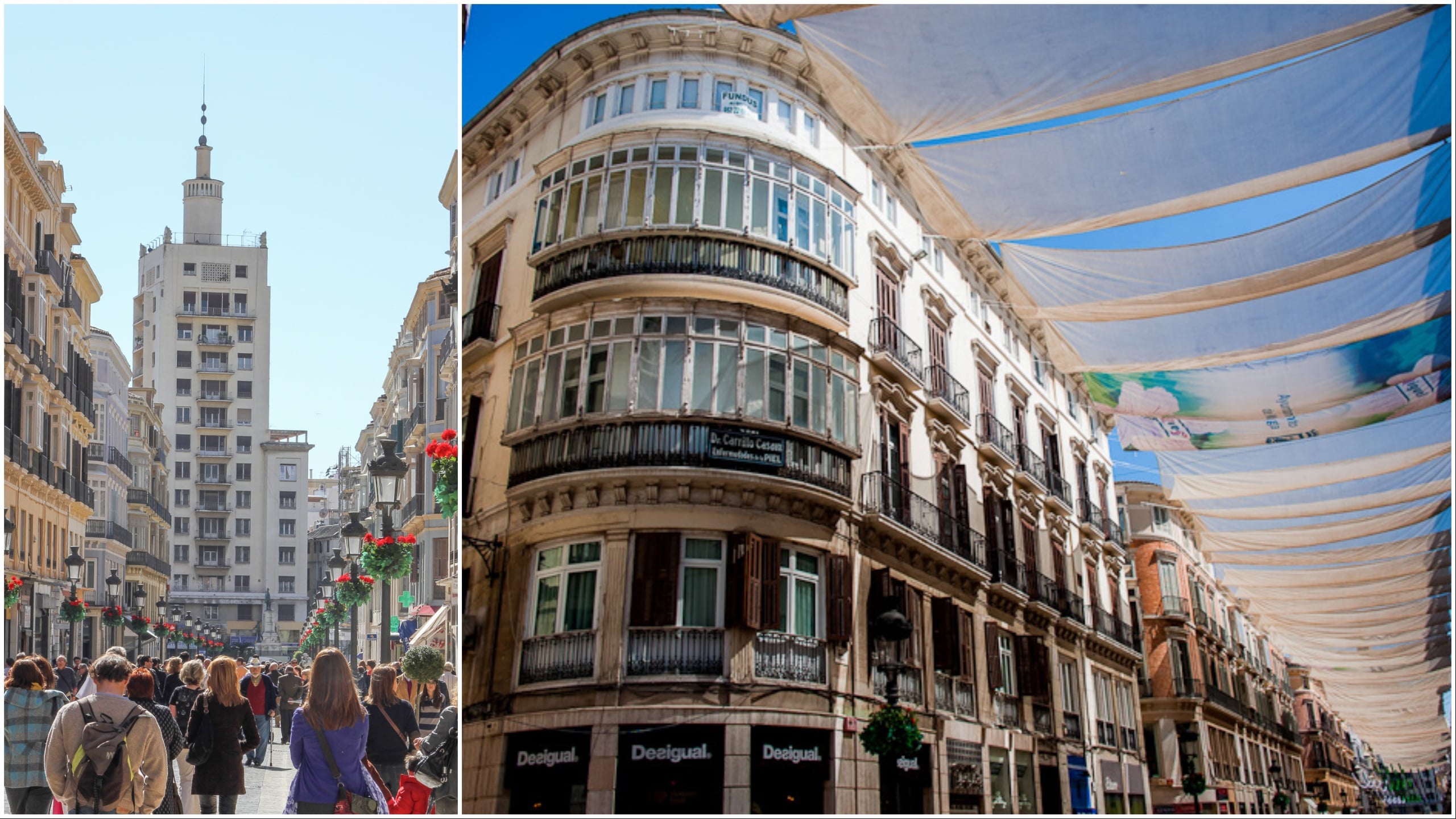
ALMOST three quarters of Malaga’s tourist flats disobey the very rules designed to rein them in, industry experts have revealed.
At least 72% of tourist accommodation (VUT) in the city do not comply with the 2011 rules set by the Plan de Ordenacion Urbana (PGOU) and therefore put the quality of homes for residents at risk, according to Julian Molina and Pedro Marin Cots.
This is a statistic that Francisco Pomares, the councillor for housing at Malaga’s Ayuntamiento, declined to confirm.
READ MORE: Tourism slumps on the Costa del Sol with Marbella hotels barely over a third full
Molina, an economics professor at the University of Malaga, told La Opinion that this was a ‘conservative estimate’ with the percentage probably being higher in reality, especially given article 6.4.2 in the rules.
It’s article 6.4.2 that states that a property may only be used as a VUT if it has independent access, services and utilities.
“Lots of these tourist properties are in residential areas where they do not comply with the rules regarding separate access points, and the Ayuntamiento allows it,” Molina said when speaking about these rules that often go unmet.
Pomares however stated that requiring separate entrances to avoid conflicts between residents is the first step in the Ayuntamiento’s approach to tackling issues with VUTs.
‘Political ineffectiveness’ has however been cited by Marin, who is the author of the book ‘The complexity in housing’ and ex-director of the OMAU office, as the reason for the excess of VUTs in Malaga.
“Malaga passed the PGOU rules however has not applied it,” states Morin who has openly criticised the city’s Ayuntamiento’s attitude towards the issue.
On the contrary, Pomares believes that if it was truly an illegal situation, more decisive action would have been taken.
The large number of tourist properties continue to change the social and urban fabric of the southern Spanish city and alter residents’ quality of life.
In Muelle Heredia-Soho ‘there are two tourists for every resident,’according to Molina, and in Centro Historico there are 920 inhabitants but over 3,000 VUTs and more than 300 restaurants. As a result, the latter location is oversaturated by 39.64%.
After consulting the Junta, the Ayuntamiento announced that they would not give any new VUT licenses to properties that did not comply with the PGOU rules.
This declaration came in January last year and has since been criticised for its exemption of existing VUTs that are not meeting regulations.
Criticism regarding the state of Malaga’s tourist accommodation continues to be heard as the phenomenon is now also contributing to an increase in property prices that has ultimately expelled residents from areas that are in high tourist demand.
In these cases tourists’ interests are being prioritised over resident needs.
It is not solely the city centre that is feeling the effects but also peripheral neighbourhoods.
Experts state that the Ayuntamiento’s recent move to limit new licenses is not enough to correct years of no control.
Pomares himself admitted that the growth of these properties could be seen as ‘out of control’ and that it has ended up causing imbalances across neighbourhoods and within the tourism system.
Now Malaga faces a dilemma as it is tied between two options; either it continues allowing the tourism sector to grow or takes a stand and implements new, more dramatic, measures to prioritise its permanent residents.
Click here to read more Travel News from The Olive Press.