
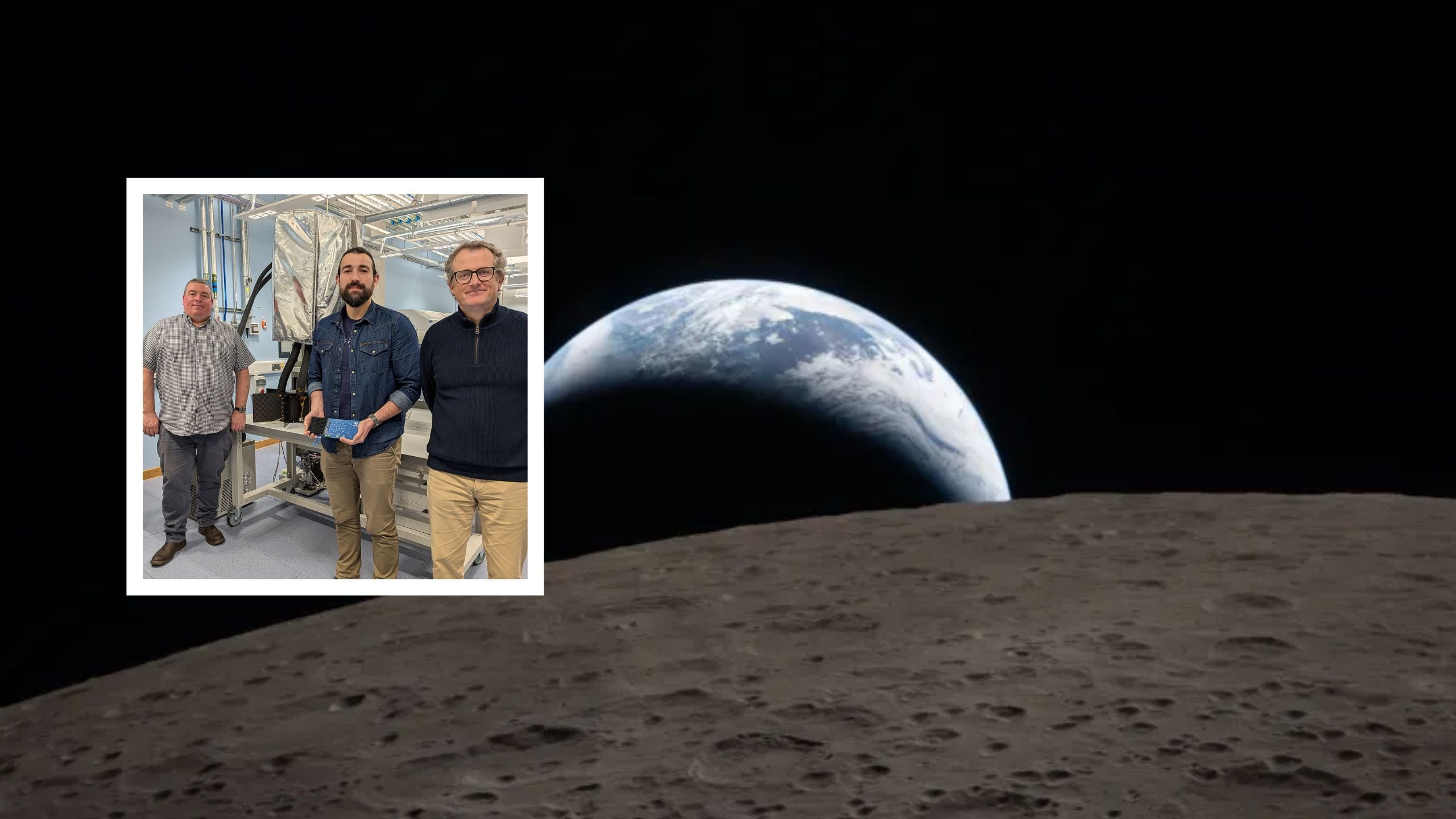
A TEAM of Spanish and British engineers has successfully tested a promising power system for space missions, bringing the solution to supply problems in extreme environments closer than ever.
The project is led by the Escuela de Ingeniería Aeronáutica y Espacial (School of Aeronautical and Space Engineering) and the universities of Oviedo and Leicester.
They aim to solve supply problems on the Moon or Mars by combining solar energy and nuclear heat sources.
The work is part of a wider programme funded by the European Space Agency (ESA), aiming to extend the lifespan of planetary science missions where traditional energy sources are limited.

Solar energy has been the usual energy source in space applications for, but it becomes far less available as missions stretch to more demanding environments.
To overcome this, the team has turned to radioisotope thermoelectric generators (RTGs), which produce heat from unstable atoms and convert it into electricity.
This provides constant energy supply even in the absence of sunlight.
The innovation lies in combining both systems. The hybrid RTG-solar architecture uses a management system that balances solar and nuclear energy depending on conditions.
During periods of sunlight, solar power is maximised, while the nuclear component ensures continued operation through long lunar nights.
READ MORE: Spain pushes ahead with plan to make abortion a constitutional right
Engineers say it also reduces the system’s overall weight by optimising the balance between solar and nuclear energy.
Waste heat generated by the RTG is also used to protect batteries and electronics during freezing lunar nights.
The project not only strengthens the bilateral ties between Spain and the UK, but also provides the global scientific community with a ‘proven and scalable energy solution.’
Jose Antonio Fernandez, a doctoral researcher, said hybrid systems like this could ‘open the door to more ambitious missions, allowing continuous scientific activity in places where it was previously impossible.’
Dr Ramy Mesalam, the principal investigator, added that the future of space exploration is ‘not about choosing between solar or nuclear power, but about the intelligent combination of both.’
Click here to read more Technology News from The Olive Press.