
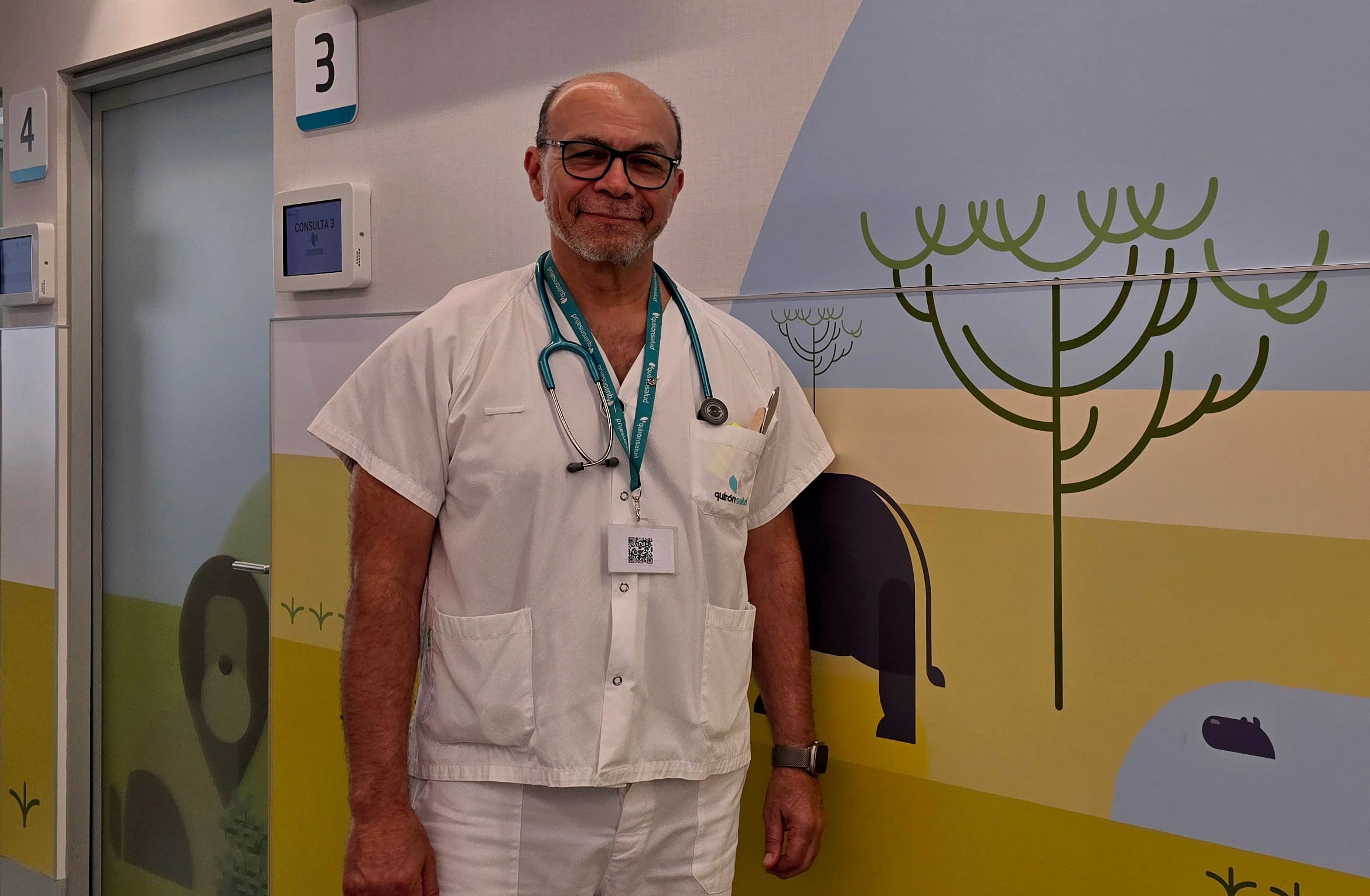
Dr. Marco Antonio Gudiño, a paediatric neurologist at Quirónsalud Marbella Hospital, warns that poor sleep affects learning, behaviour, and growth, and increases the risk of obesity or emotional problems in children and adolescents.
GETTING a good night’s sleep in childhood is about much more than just resting. Sleep plays a fundamental role in children’s brain, physical, and emotional development, and its quality directly influences learning, memory, emotional regulation, and daily behaviour.
However, sleep problems are becoming increasingly common among children and adolescents, often linked to poor habits and excessive use of electronic devices.
Dr. Marco Antonio Gudiño Pérez, a pediatric neurologist at Quirónsalud Marbella Hospital, notes that “sleep is an essential biological function for a child’s neurological, physical, and emotional development,” since key processes such as brain maturation, memory consolidation, and metabolic regulation occur during rest hours.
He also warns that consistently poor sleep can directly impact academic performance and behaviour. “Many behavioral issues or academic difficulties can stem from insufficient or poor-quality sleep,” the specialist notes.
Regular routines and schedules
To promote adequate rest, the pediatric neurologist emphasizes the importance of maintaining consistent habits from an early age. Among the key recommendations is establishing regular bedtimes and wake-up times, even on weekends.
“Going to sleep and waking up at the same time every day helps the brain regulate the sleep-wake cycle,” he explains.
He also recommends establishing a pre-sleep routine to help the child relax before bedtime. Activities such as a warm bath, a light dinner, or quiet reading help prepare the body for rest.
The environment where the child sleeps also plays a decisive role. According to Dr. Gudiño, the bedroom should be kept “dark, quiet, and at a comfortable temperature,” thereby promoting deeper and more continuous sleep.
Screens: One of the main enemies of sleep
Using cell phones, tablets, video games, or social media before bedtime is currently one of the factors that most disrupts children’s sleep. This increasingly common habit is behind many sleep problems in childhood and adolescence.
“Screens are one of the main causes of sleep disruption in children,” warns the doctor.
The blue light emitted by these devices inhibits the production of melatonin, the hormone responsible for regulating sleep, and also causes brain overstimulation that makes it difficult to wind down before bedtime.
For this reason, the recommendation is to avoid screens at least one hour before bedtime and, “ideally, two hours for adolescents.”
Warning signs that should not be ignored
The specialist notes that certain symptoms may indicate the presence of a sleep disorder that requires medical evaluation. Key warning signs include frequent snoring, pauses in breathing during the night, excessive daytime sleepiness, or persistent problems with attention and behavior.
In some children, poor sleep does not cause fatigue, but rather paradoxical hyperactivity, irritability, or difficulties in school, explains the pediatric neurologist. He also warns that chronic sleep deprivation can contribute to metabolic disorders and increase the future risk of obesity, hypertension, and other health problems.
Promoting independence in sleeping
Another important aspect is teaching the child to fall asleep progressively on their own, avoiding a constant reliance on external stimuli to fall asleep.
In this regard, the specialist advises avoiding constant associations with elements such as holding, a stroller, or television, and responding calmly to nighttime awakenings.
“If you enter the room, it should be briefly, with dim lighting, and without stimulating the child,” he recommends.
Additionally, he emphasizes the importance of avoiding stimulant beverages or excessive sugar intake at night, especially in older children and adolescents.
Good sleep is also key to future health
Beyond fatigue or irritability, chronic sleep deprivation can have significant short- and long-term consequences. Sleep problems in childhood can affect learning, emotional regulation, attention, and daily behaviour, as well as increase the risk of metabolic and cardiovascular issues in adulthood.
For this reason, the specialist emphasizes the importance of paying attention to sleep habits from an early age and consulting a professional when sleep problems persist over time or affect the child’s well-being.
Sleeping well not only improves daily rest but is also key to a child’s development, learning, and future health.
Quirónsalud in Andalucia
The Quirónsalud Group in Andalucia currently operates eight hospitals located in the cities of Málaga, Marbella, Los Barrios (Cádiz), three in Seville (Sagrado Corazón, Infanta Luisa, and Materno-Infantil), Córdoba, and Huelva, as well as two surgical day hospitals in Seville and Málaga and 22 specialty and diagnostic medical centers; this positions it as the leading private hospital group in this autonomous community.
About Quirónsalud
Quirónsalud is the leading healthcare group in Spain and, together with its parent company Fresenius-Helios, also in Europe.
In addition to its operations in Spain, Quirónsalud is also present in Latin America. Collectively, it employs more than 50,000 professionals across over 180 healthcare centers, including 57 hospitals with more than 8,000 hospital beds. It is equipped with state-of-the-art technology and a large team of highly specialized professionals of international renown.
Among its facilities are the Fundación Jiménez Díaz University Hospital, Teknon Medical Center, Ruber Internacional, Quirónsalud Madrid University Hospital, Quirónsalud Barcelona Hospital, Dexeus University Hospital, Policlínica Gipuzkoa, General University Hospital of Catalonia, Quirónsalud Sagrado Corazón Hospital, etc.
The Group is committed to promoting education (eleven of its hospitals are university-affiliated) and medical-scientific research (it operates the FJD Health Research Institute, accredited by the Ministry of Science and Innovation).
Furthermore, its healthcare services are organized into cross-functional units and networks that enable the optimization of the accumulated experience across the various centers and the clinical translation of their research.
Currently, Quirónsalud is developing a wide range of research projects throughout Spain, and many of its centers are at the forefront of this field, serving as pioneers in various specialties such as oncology, cardiology, endocrinology, gynecology, and neurology, among others.
For more information:
Rocío Sánchez
Head of Communications
Quirónsalud Marbella Hospital
689 533 267 – rocio.srivera@quironsalud.es
Click here to read more Health News from The Olive Press.