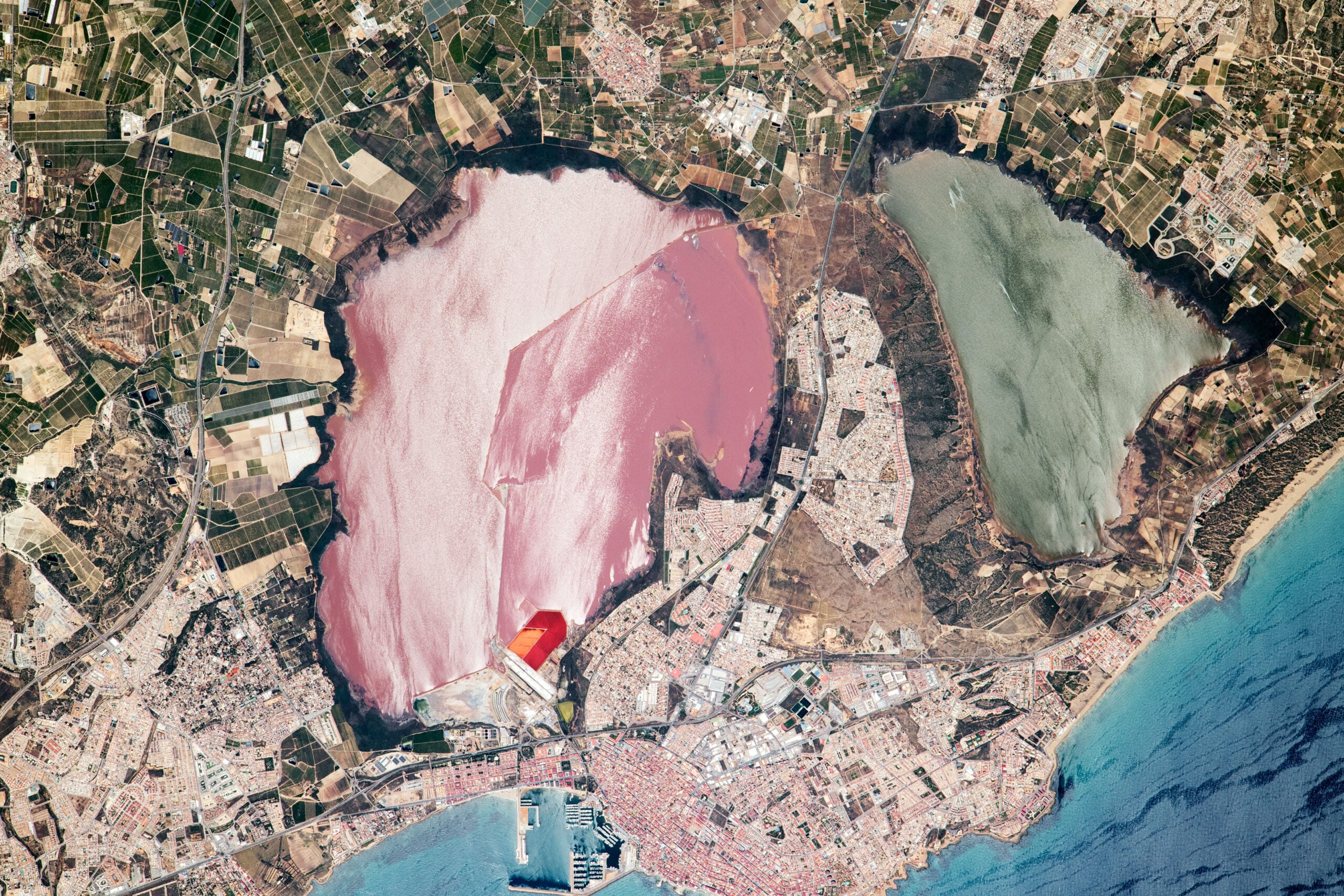
AN ASTRONAUT aboard the International Space Station captured a striking photograph of Torrevieja’s famous pink lagoon from space.
The picture was taken during Expedition 65 in June 2021 from around 400 kilometres above Earth, the image shows the bright pink waters of Torrevieja sitting beside the green lagoon of La Mata and the deep blue Mediterranean Sea.
While the colours may look like a natural work of art, scientists say they actually reveal an extreme and delicate chemical environment invisible from ground level.
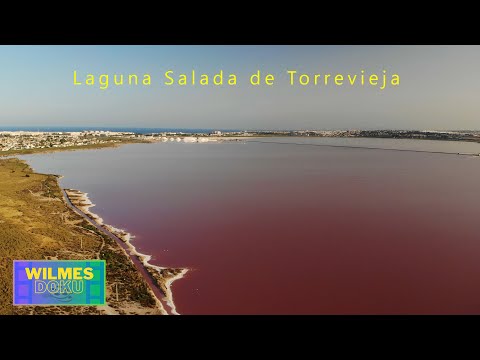
The vivid pink colour comes from a microorganism called Dunaliella salina, a microalga that thrives in hypersaline water under intense sunlight.
READ MORE: Flamingos nest for ‘first time ever’ in Torrevieja’s salt lake with at least 600 chicks born

To survive the harsh conditions, the organism produces large amounts of beta-carotene, the same pigment that gives carrots their orange colour.
At the same time, salt-loving microorganisms known as halophilic archaea add red pigments to the water, intensifying the lagoon’s famous pink tone.
Scientists say these extreme organisms are now attracting NASA’s attention because they may offer clues about ancient life on Mars.
Data collected by NASA’s Perseverance rover suggests Mars once contained hypersaline lakes similar to those found in Torrevieja.
Researchers believe studying how microorganisms survive in Alicante’s salty lagoons could help scientists understand what signs of life to search for on the red planet.
What makes the discovery even more remarkable is that the colours visible from space reveal more about the lagoon’s chemistry than some traditional water tests.
READ MORE: Salt sent to Spain’s snowy centre in storm solution and show of ‘solidarity’ by Costa Blanca cities
The neighbouring La Mata lagoon appears green because its lower salt concentration supports completely different microorganisms dominated by chlorophyll rather than carotenoids.
Despite sitting just one kilometre apart, the two lagoons have entirely different ecosystems.
Torrevieja’s lagoon is also far more than a tourist attraction.
The salt lake has been used for salt production since the 13th century and today remains the largest salt producer in Europe, generating around 650,000 tonnes annually.
READ MORE: Warning as Spain dramatically misses WHO health target to reduce salt consumption by 2025

Its unique salinity also supports hundreds of species of birds, plants and microorganisms, including one of the Mediterranean’s most important breeding colonies of Audouin’s gull.
However, scientists warn climate change could threaten the fragile balance that gives the lagoon its famous colour.
Changes in temperature and salinity could affect the survival of Dunaliella salina, potentially causing the iconic pink waters seen from space to slowly disappear.
Click here to read more Spain News from The Olive Press.