

Sightings of drug-running narco boats on the Guadalquivir river have plunged by 80% in a year, according to the government in Sevilla.
The central government’s sub-delegation in the Andalucian capital put the drop down to more Guardia Civil and National Police officers on the ground and a stepped-up maritime presence on the river.
Subdelegate Francisco Toscano described the fall as ‘drastic’.
Between January and August, 29,423kg of cocaine was seized across the six provinces – an average of more than 3.6 tonnes a month.
The figures were presented at a meeting in Sevilla on Tuesday of the operational committee behind the Campo de Gibraltar Special Security Plan.
‘By August we had already reached 78.7% of all seizures recorded in 2025,’ Fernández told a press conference after Tuesday’s meeting.
Hashish nonetheless remains the most-seized drug, with 104,675kg intercepted between January and August – 74% of everything seized under the plan this year.
Marijuana seizures reached 6,882kg.
Fuel seizures, used to keep the speedboats running, have also soared, with close to a million litres intercepted so far this year.
‘We are about to exceed what was seized in the whole of 2025,’ Fernández said.
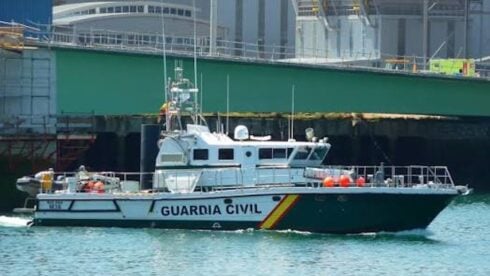
The Guardia Civil now keeps patrol boats stationed almost permanently at the mouth of the Guadalquivir, near Sanlúcar de Barrameda.
But he admitted ‘a lot of work’ remains to be done.
The statement did not give the actual number of sightings behind the 80% figure.
The river has long been one of southern Spain’s most notorious smuggling corridors.
In February 2025, footage of several narco-boats cruising up the river in broad daylight as far as Sevilla’s La Cartuja stadium caused a national outcry.
Interior Minister Fernando Grande-Marlaska blamed bad weather and insisted the boats were ‘under siege’.
The State Prosecutor later warned of a ‘scandalous proliferation’ of narco-boats around the Sanlúcar estuary.
In July, the government approved €8 million for three floating barriers across the estuary and two of its channels to block the speedboats’ path upriver.
Launched in 2018, the Campo de Gibraltar plan now covers six Andalucian provinces: Almería, Cádiz, Granada, Huelva, Málaga and Sevilla.
According to the government, the €190 million plan has led to 34,499 arrests or investigations and the seizure of 2,321 tonnes of drugs, 3,531 firearms and 2,398 boats in eight years.
The latest plan runs from January 2026 to the end of 2027, with a budget of €38 million.
But not everyone is convinced the gangs are in retreat.
But not everyone is convinced the gangs are in retreat. Recent Guardia Civil operations show the trade spreading beyond the Strait to the Huelva coast, with heavily armed crews and ever more powerful boats – and police unions are still calling for more resources.
Click here to read more Andalucia News from The Olive Press.