

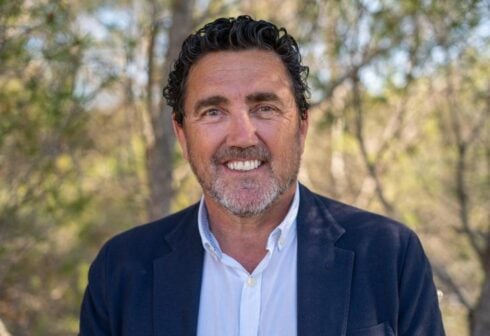
SITTING at the mahogany desk of his open-plan office, Juan Antonio Amengual has the look of a man satisfied with a job well done.
Outside of his window, Mallorca’s sprawling countryside has been baked brown by another merciless late-summer heatwave.
But inside it is cool, with Amengual, a member of the conservative Partido Popular (PP), radiating the unshakeable confidence of a politician convinced that his direction of travel is the right one.
Since 2023, he has been mayor of Calvia, overseeing the rapid transformation of some of Mallorca’s most popular tourist hotspots, including Palmanova, Santa Ponsa and, most prominently of all, Magaluf.
“There’s been a major change. That is evident,” he says. “I think the transformation of Magaluf was one everyone wanted, though nobody had previously managed to achieve it.”
It all began in early 2020, just before the Covid pandemic, when the Balearic government passed an ‘excess tourism’ decree targeting some of the worst elements of the islands’ notorious party scene.
The new law imposed strict limits on all-inclusive drinks, banned alcohol advertising in certain areas and outlawed happy hours, two-for-one drinks deals and self-service alcohol dispensers in hotels.
Calvia followed that with a crackdown of its own.
According to the council’s own figures, last year was the ‘calmest’ tourist season on record, with complaints made to police down by 30 per cent.
This summer, the local police force’s crime-fighting efforts have been aided by a new fleet of high-tech thermal-imaging drones, allowing officers to track down troublemakers from afar.
For Amengual, however, the clearest proof that the transformation is working came during the FIFA World Cup in July.
“I’ll give you an example,” he says.
“The semi-final England lost against Argentina – a disaster, an absolute disaster. Eight years ago, that would have meant riot police, horses and a legion of officers here in Magaluf.
“But here, England lost in the last ten minutes, and nothing happened. Of course there were a few angry people, as I would be too, but nothing happened.
“The police reported nothing, a handful of drunk people at most. In the past, you’d have had a full-scale chair-throwing brawl, wrecked bars, police intervening like it was a riot in Paris. Now, that’s history. That, for me, is the transformation of Magaluf.”
It is a transformation he is determined to push further.
As part of his strategy to improve Magaluf’s low-brow image, Amengual and his team have turned their attention to attracting different types of visitors: fewer young partygoers and more families; fewer all-night revellers and more early risers; fewer British visitors, with more Germans, French, Portuguese, Spanish and American holidaymakers favoured instead.
That means not necessarily a reduction in visitor numbers, but a higher quality of tourist, spending more money in local businesses.
To help this, priority has been given to new four and five-star hotels, which now make up more than 85 per cent of Calvia’s total accommodation capacity.
“Yes, it is true that we have reached a point of overtourism at certain times of the year,” Amengual admits. “If a few less tourists came in July and August, I wouldn’t lose any sleep over it.
“My goal, instead, would be to encourage longer stays, and to build up stays throughout the rest of the year, where things like hiking or health and wellbeing activities take more of a leading role.
“To really showcase the island’s food and culture, not just the sun and beach, which has been and will always remain our big calling card.

“We want Magaluf to become a global point of reference – a place where that old offer built upon excess and overtourism gives way to tourism and coexistence, where people talk about culture. We have a music festival, we have a literary festival called FLAM, we have concerts like Mallorca Live.”
There are signs that this approach is working.
“This past winter was the winter with the most hotels open in Calvià’s history,” he explains.
“The start of this spring season went very well, with major sporting events and a conference. And July and August can barely grow anymore, because everything is already essentially full. The forecast is that the season will stretch even further – even flight routes have been extended into November.”
But whether Magaluf will ever truly be able to shed its reputation for boozy debauchery remains to be seen.
“The public image moves much more slowly than reality and what we are doing in Magaluf,” explains Jaime Mora, Calvia’s director of tourism.
“There might be work still to do, sure, but we do a lot, and not everything can be captured. Above all, it is hard to change people’s perceptions quickly.”
“Magaluf will always carry a brand associated with fun,” adds Amengual.
“That memory will always exist, because there is a past and you cannot change the past. But what we can do is work on the future, and maybe in ten years we won’t be talking about excess anymore.”
READ MORE: Young Brits favouring Benidorm over Magaluf as Mallorcan resort tries to shake party reputation

It all leaves Amengual in an unusual position.
He readily acknowledges the pressures that mass tourism places on Mallorca and the need for change, but remains adamant that the answer is not to close the door on visitors from abroad, particularly in a municipality where more than 30 per cent of residents are foreign-born.
What he is, however, is far less sympathetic to the anti-tourism movement, especially when it adopts tactics he regards as hostile to the very visitors on whom the island depends.
He cites the example of a manual recently published by activist group Menys Turisme, Mes Vida, advocating for direct action, or the case of two women linked to the group arrested for allegedly vandalising five real estate agencies in Santa Maria del Camí.
“I respect the right to protest,” he says.
“But what I am completely against is anything resembling anti-tourism kale borroka [a Basque term for street violence] – spray-painting graffiti or insulting our tourists.
“We don’t support that. And not only do we not support it, but we will try to actively defend against it, because ultimately our tourists are us. Tomorrow, I am a tourist in London, or someone from London is a tourist here, and we have to defend that position.
“So to the tourist who sees graffiti going up saying, ‘Tourists go home’, I apologise. But against this kind of guerrilla action, there’s not much we can do.”
Click here to read more Spain News from The Olive Press.