

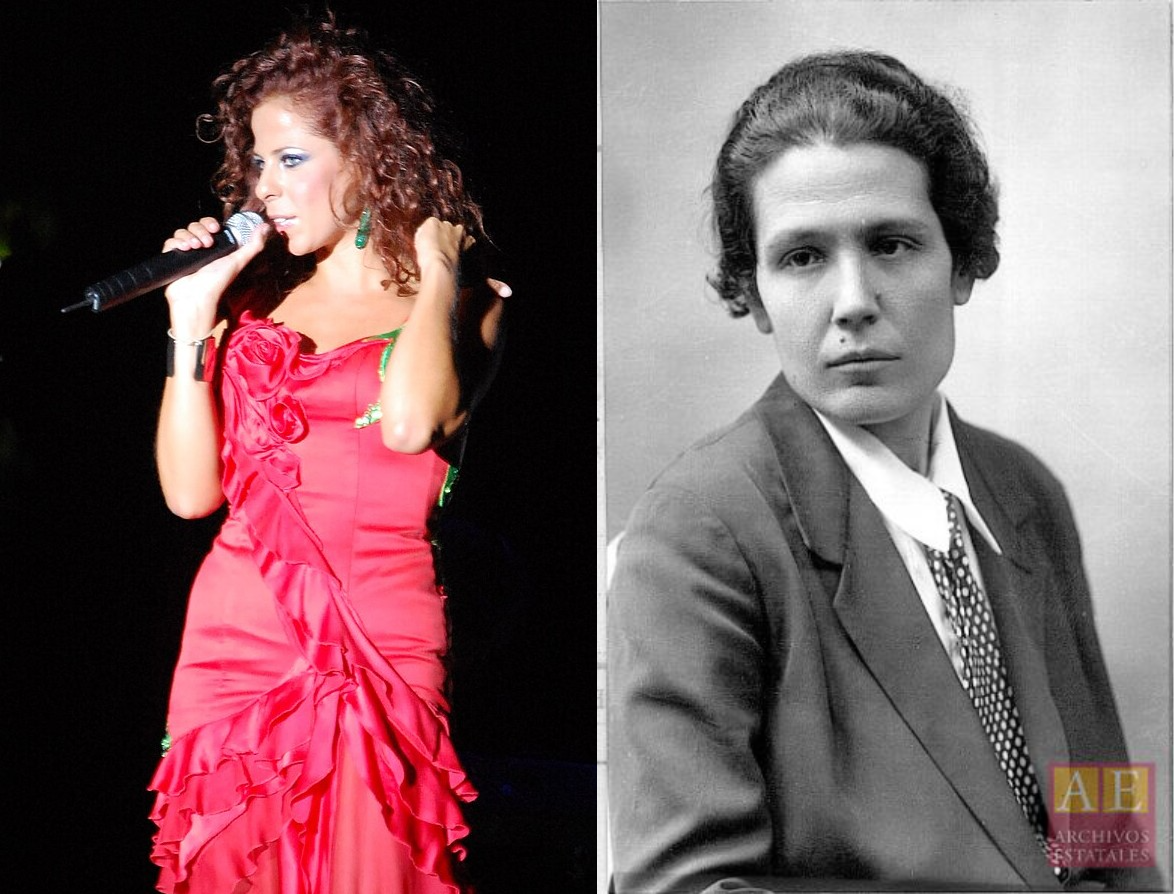
IT’S late September, and we’re reminded of two remarkable women from Andalucía whose anniversaries fall close together.
First, we celebrate the life of Victoria Kent – a pioneering figure whose legacy has left an indelible mark on Spanish history.
If you’ve ever taken the local train to Málaga Airport, you’ve likely passed through a suburban station with a name that seems almost out of place: Victoria Kent. The station honours one of Malaga’s most accomplished daughters.
Victoria Kent passed away on 25 September 1987, at the age of 90.
In the 1920s, when Spanish women were allowed to attend universities for the first time, Victoria chose Law as her field of study. She became the faculty’s first female student and later gained national fame for defending Army officer Albornoz -a case that was heard before a court martial, a realm where no woman had previously set foot.
Her talents did not go unnoticed. In 1931, at the age of 34, she was appointed Minister of Prisons in the newly established Second Republic. But her politics placed her on the ‘wrong’ side as far as Franco was concerned. When the dictator rose to power, Victoria fled to Paris just ahead of her arrest – she was sentenced to 30 years in prison in absentia.
Victoria’s four decades of exile were filled with incident. In the late 1930s, she sought to emigrate from France to Mexico. However, the delay in processing her paperwork was so severe that the outbreak of World War II forced her into hiding at the Mexican embassy.
Although she was a passionate feminist, Victoria was not in a hurry to grant Spanish women the vote. Her stance – one that made her unpopular among many – was that Spanish women of the time were too subservient to the church and their husbands. She called for a gradual extension of women’s suffrage and a series of civic education programs to help break the dominance of the altar and the kitchen.
In the 1980s, many of these restrictions were lifted. Though she briefly returned to Malaga, Victoria had by then become the soul of an exile, ultimately settling in New York, where she passed away in 1987.
Pastora Soler’s name may not ring a bell, but chances are you’ve heard her voice. She is one of Andalucía’s most celebrated singers.
Born María del Pilar Sánchez Luque on 28 September 1978 in a small village just outside Sevilla, Pastora Soler will celebrate her 47th birthday this week.
From an early age, Pastora exhibited a powerful, melodic voice and became known for performing coplas – tragic ballads that are a staple of Spanish music. At just 16, she was signed to Polygram, and her career took off from there.
Her debut single, Dámelo Ya (‘Give It To Me Now’), became a huge hit, not just in Spain but internationally, reaching number one in Turkey and selling hundreds of thousands of copies. The song remains a classic in Spanish nightclubs and at local festivals.
Her follow-up hit, Corazón Congelado (‘Frozen Heart’), was adopted as the theme song for the Vuelta, Spain’s equivalent of the Tour de France.
In recent years, however, Pastora’s career has taken a backseat. The COVID pandemic certainly didn’t help, but the main reason for her hiatus has been a focus on her family. She has two young daughters, Estrella and Vega, aged 10 and 5, respectively.
READ MORE:
- LIFE IN SPAIN: Spanish surnames – why do they have two?
- LIFE IN SPAIN: Fuente Ovejuna, is it a town? Is it a drama? Is it an idea?
- LIFE IN SPAIN: The dark secrets behind Marisol – one of Spain’s biggest child stars
Perhaps the most publicised reason for her break from the spotlight, however, is her honest admission that she suffers from stage fright. Though some in the press have downplayed her condition, Pastora insists it is no laughing matter. She believes that societal expectations placed on women in Spain are partly to blame for a range of nervous ailments, such as agoraphobia.
“There are thousands of women,” she says, “who are expected to stay at home and never venture out. Sadly, many of them even believe this is their role.” She believes that even in 2025, this mentality prevents many women from fulfilling their potential. “In Spain, women are often valued for being modest, quiet, and home-loving. While these qualities are fine, some of us have more to offer.”
Pastora is now back in the public eye, appearing on national TV shows, and there’s even talk of her representing Spain in the Eurovision Song Contest.
Although Victoria Kent and Pastora Soler never met, it’s fascinating to think that, given the proximity of their birth and death dates, the baton has passed from one generation of Andalusian women to another.
Click here to read more Spain News from The Olive Press.




AI,AI.AI, shame, because the core of the stories are so interesting, but instead, they beome banal.
Perhaps you have some advice on how, in a 700-word article for a general readership, I can make my literature profound.
I edited this article. It most definitely is not AI. I can spot it a mile away!
I am the journalist who wrote it. I resent the implications. Do you want to come and inspect my hard drive?
Michael Coy