

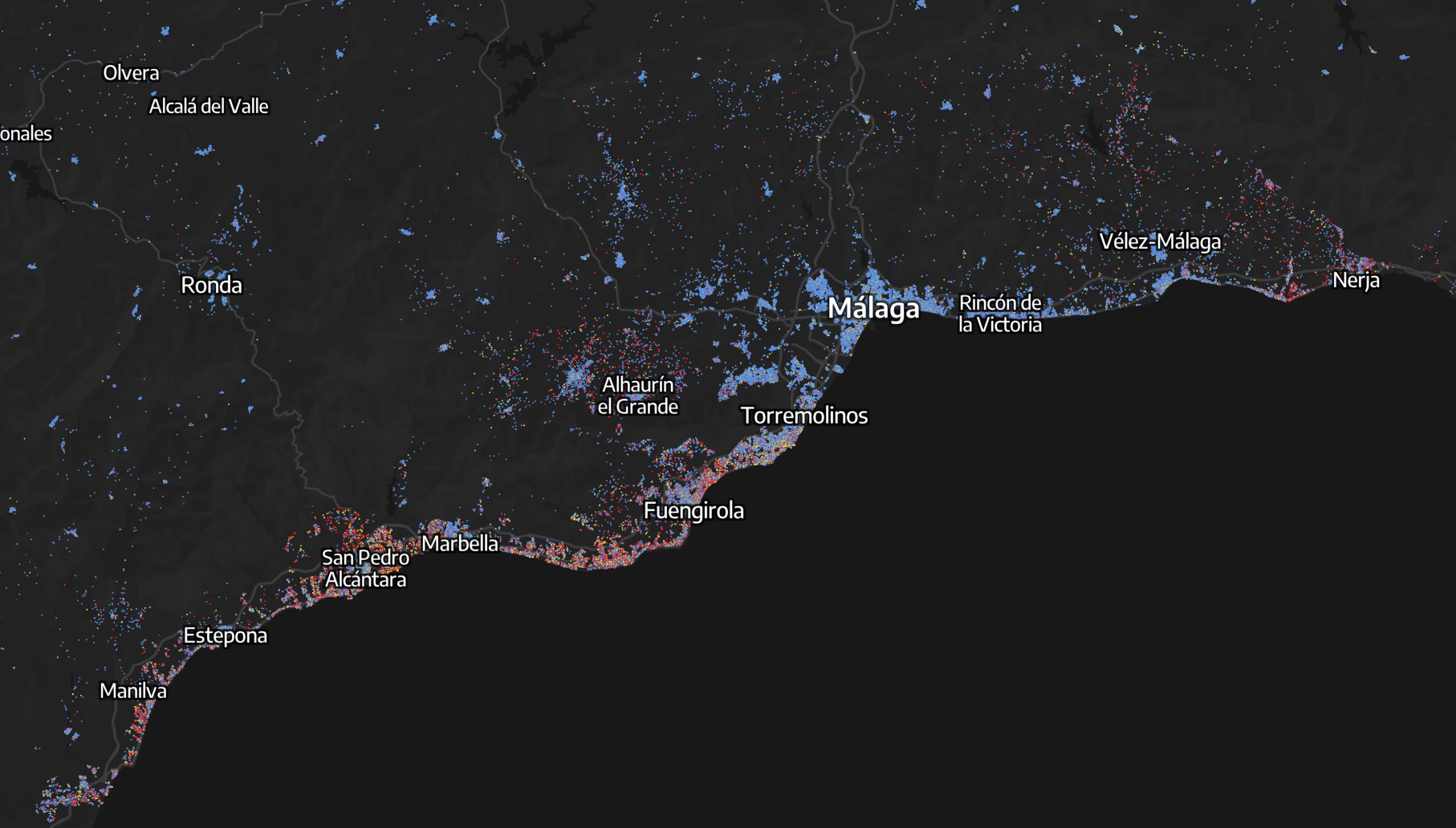
EUROPEAN residents far outnumber Spaniards across entire swathes of Spain’s southern coastline, new data has revealed, as expats appear to be clustering into ‘parallel societies’ on the Costa Blanca and Costa del Sol.
Striking graphics by elDiario show that stretches of coast near Malaga, Murcia, and Alicante, as well as southern Tenerife, are now home to overwhelmingly European-majority populations – with Spaniards making up as little as 11% of residents in areas near Torrevieja on the Costa Blanca.
It follows a startling revelation in October that Spain’s unprecedented population surge is driven largely by foreign-born residents – with the expat community growing around 20 times faster than the local population, according to data from Spain’s Instituto Nacional de Estadistica (INE).
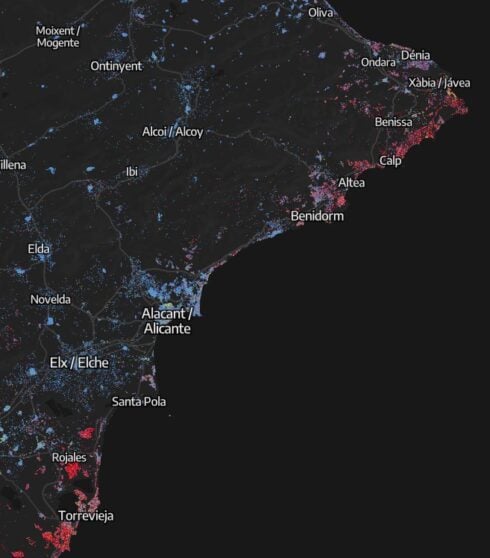
In one of the most striking examples highlighted by elDiario, the map shows that the town centre of Rojales – a small municipality north of Torrevieja – is now home to 81% registered European expats.
Close behind on the Costa Blanca are San Fulgencio, with a European expat majority of 71%, and south Orihuela, where Europeans represent 70% of residents – with Spaniards accounting for just 17%.
Around this area, larger urban centres such as Cartagena, Murcia, or Alicante proper are still populated predominantly by Spaniards.
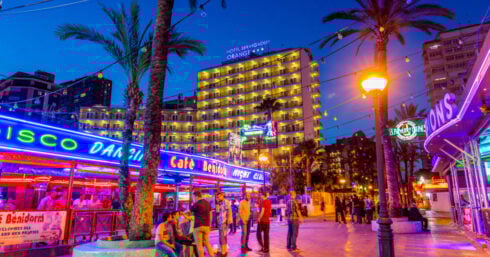
But further up the coast, in the tourist magnets of Benidorm, Teulada and Javea, entire neighbourhoods registered European populations of around 70%, continuing a pattern of foreign concentration along some of the region’s most sought-after seaside towns.
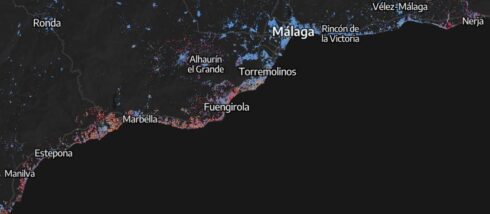
On the Costa del Sol, parts of Marbella, Mijas, Fuengirola, Manilva, and Estepona also showed European population peaks of around 45%, although Spaniards remained the majority in other neighbourhoods.
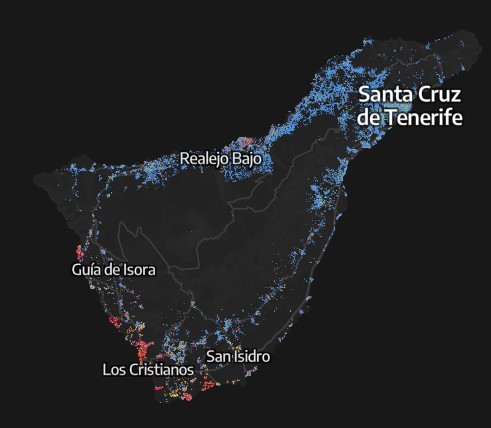
The trend is not limited to the mainland. In southern Tenerife, several towns have evolved into sizeable European enclaves, with parts of Adeje and Santiago del Teide recording 52% and 60% European residents respectively.
While the map does not break down the specific nationalities making up Spain’s foreign-born community, recent data from Idealista shows that British buyers purchased more than 5,500 homes in the first half of 2025 — making them the leading foreign nationality in Spain’s property market.
Over the same period, 12% of British buyers chose Andalucia and 11% opted for Murcia.
According to the INE, nearly 270,000 Brits were registered residents of Spain in early 2025.
Spain’s population reached historic highs in 2023 and 2024, surpassing 48 million inhabitants.
The shift was fuelled chiefly by arrivals from other EU countries as well as the UK, Latin America, and North Africa.
The INE attributes the surge to a mix of factors, including a sharp uptick in long-term foreign residents drawn by Spain’s climate and quality of life.
About 9.3 million people living in Spain in 2025 were born abroad, according to the INE – nearly one in five residents.
Of those, just over three million now hold Spanish citizenship, while the remaining six million retain their original nationality.
READ MORE: Spain hits record population of almost 50 million, mainly driven by immigration
Spain is the fifth country in Europe with the highest proportion of foreign-born residents, behind only Austria, Sweden, Germany and Belgium.
In all of these countries, the share of people born abroad exceeds 18%, and growth has followed a similar trajectory: between 2010 and 2024, the foreign-born population increased by around 40%.
The ongoing population boom is unmatched in modern Spanish history.
While the surge has helped offset the country’s chronic low birth rate and ageing population, it is also reshaping the social fabric of coastal regions, where foreign residents increasingly outnumber locals.
Click here to read more Costa Blanca News from The Olive Press.







They are called immigrants. Just because the UK made immigrant a dirty word doesn’t mean they aren’t.
I agree. I hate the term ‘expat’. For me it implies, and I am generalising of course, a foreigner who has moved to Spain for the weather and cheap booze and has no intention of trying to integrate nor to learn Spanish. WE ARE IMMIGRANTS! In the true original meaning of the word.