

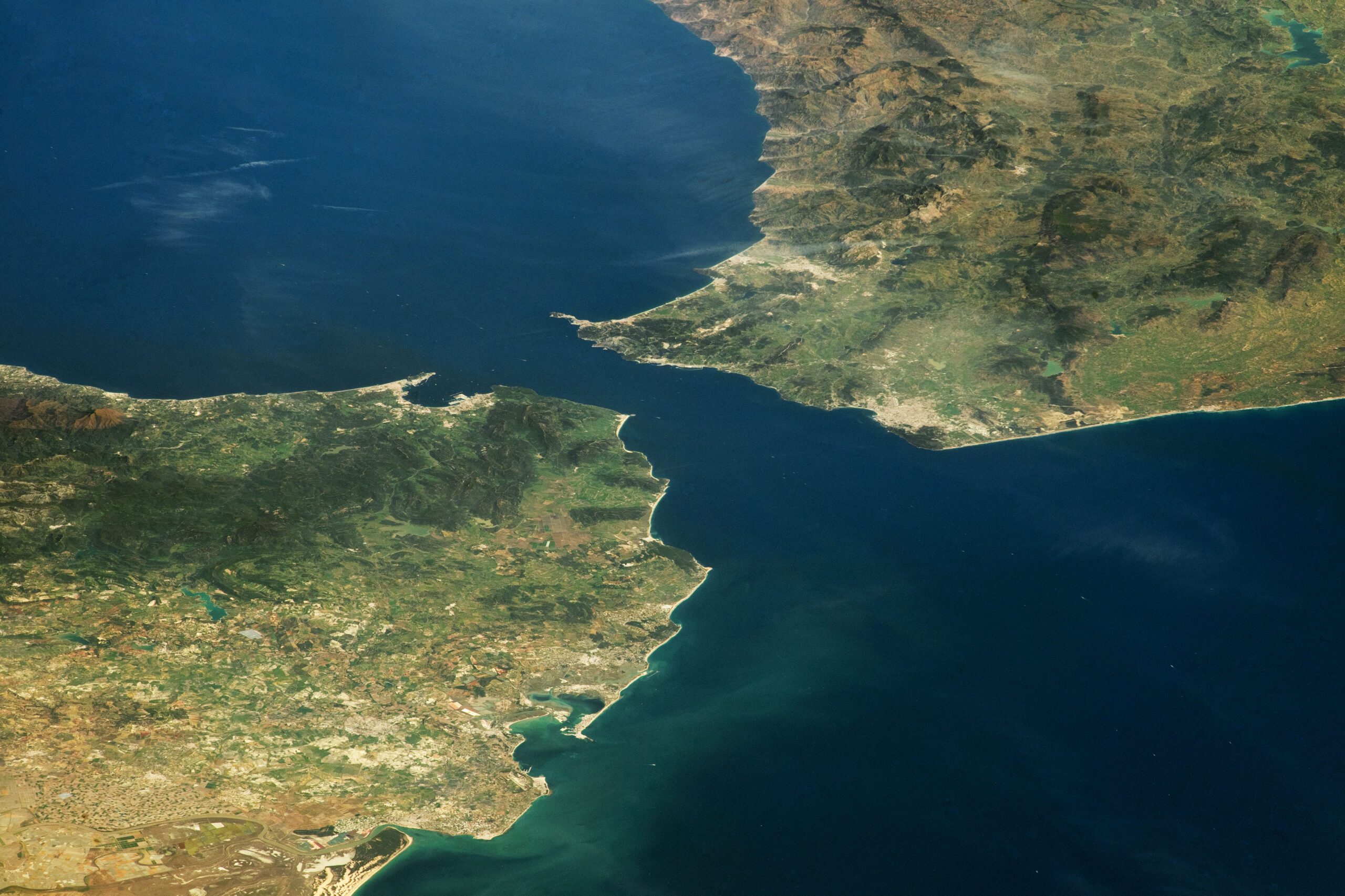
A TUNNEL connecting Europe to Africa beneath the Strait of Gibraltar is now considered possible, scientists have announced – as Spain revives a landmark engineering project that had been dormant for decades.
A study commissioned by the Spanish government and conducted by German tunnel specialists Herrenknecht concluded in October that drilling a railway tunnel below the Strait would be technically feasible using today’s technology.
Authorities have since tasked Spanish consultancy Ineco with drafting a blueprint for the project by the end of 2026, with hopes that government approval could come as early as 2027.
Since the idea of building a physical connection between Europe and Africa was first floated in the 1970s, the project has periodically appeared in electoral campaigns and government agendas, but no concrete steps had been taken until now.
The tunnel, to be bored beneath the 14-kilometre stretch of water separating southern Spain from Morocco, would be loosely modelled on the Eurotunnel, which connects Britain to France under the English Channel.
Featuring two parallel railway tunnels, each carrying trains in one direction, the project would likely link Punta Paloma in the province of Cadiz with Morocco’s Cape Malabata near Tangier.
The total length of the tunnel would be around 42 kilometres, with nearly 28 kilometres running under the sea.
The maximum depth is expected to exceed 470 metres, making it a deeper underwater structure than the Eurotunnel.
Once completed, the crossing is estimated to take around thirty minutes by train, with the capacity to transport both passengers and freight.
If approved, fieldwork could begin in 2030, with the main construction phase scheduled between 2035 and 2040, although these dates are preliminary and subject to change.
The final price tag is expected to reach at least €15 billion, with Spain shouldering more than half of the expense – somewhere between €8.5 and €9 billion, authorities estimate – and Morocco contributing through its own investments.
The current route is the result of decades of discarded proposals, including an early idea for a suspension bridge, which was dismissed due to the Strait’s depth, seismic activity, and extreme wind conditions.
In the 1990s and early 2000s, a mixed tunnel for trains and vehicles was considered, but ventilation, safety, and evacuation requirements made it unfeasible.
The project’s revival coincides with a rare period of political alignment between Madrid and Rabat, strengthened by Spain’s 2022 support for Morocco’s autonomy plan for Western Sahara and reinforced by a recent UN Security Council resolution endorsing the decision.
Click here to read more Gibraltar News from The Olive Press.





I didn’t see anything relating to the cost? And how will the funds be raised?