
IMAGINE that you’re driving to Cadiz for a holiday from Madrid or Marbella, and you’ve decided to leave the main road, in order to take in some of the province’s delightful little villages.
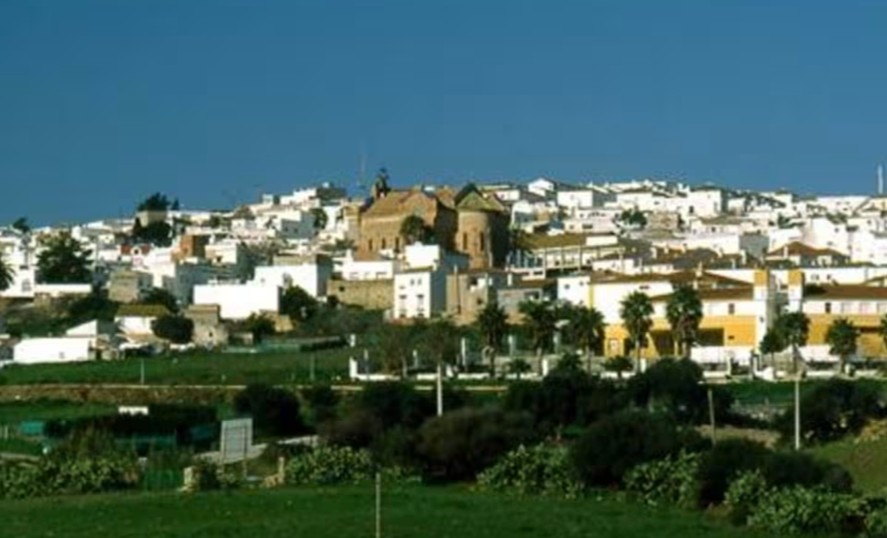
Midway between the evocatively named Alcala de los Gazules and Vejer de la Frontera, you’ll come to a simpler sounding Benalup.
Yet another beautiful white village, encircled by mountains, under that famous, flawless cobalt-blue sky. It seems as if this little gem of Old Spain has been here forever.
READ MORE: REYES: The connections to Spain’s top composer and a now extinct rare mountain goat
And it has. The Romans were even living here.
But it wasn’t always called ‘Benalup’. It was actually Casas Viejas, but became one of the only settlements in Europe that changed its name to try and erase a terrible event that happened there.
We need to go back a century when Cadiz was known to be a breeding ground for socialism and communism, unsurprising as the majority of residents lived on the bread line mostly as day labourers (‘braceros’).
But there were tens of thousands more people who went even further to the left to become anarchists.
If we use the word at all today, we mean, loosely, people who don’t accept organised society.
Back between the two World Wars, anarchists were followers of the Russian revolutionary, Michael Bakunin, and they held a specific set of beliefs, largely to think locally and that one day, everyone would be equal.
Braceros certainly led a miserable life. They were farm labourers who owned no land and would gather at dawn outside the home of the local landowner, hoping he would hire them for the day, so that they could earn a few measly pesetas.
Out of maybe 20 desperate men, sometimes just three of four might be taken on, unless it was the annual harvest time.
It meant many people only got to work for short periods of the year and were effectively starving and relying on the charity of their neighbours and family to stay alive.
Reasons for rejecting a man for work often boiled down to personal animus (bosses and workers all knew one another well, and grudges often dated back years).
The philosophy of anarchism called for a change in this status quo. It asked for the abolition of property: communities should be small, growing their own food, and sharing it equally.
No bosses, no humiliating systems of hiring and firing.
It is easy to understand why anarchism led by the local CNT trade union became such an appealing ‘religion’ to many braceros.
Casas Viejas – as Benalup was called – was one village where anarchism was rapidly starting to take root.
Enter Francisco Cruz, better known as ‘Seisdedos’ (Six Fingers), the dominant personality among the village’s anarchists (not their leader – anarchists don’t have leaders).
He tried to organise the workers into groups and peacefully petition for change.
And it seemed to Seisdedos and his followers that change was coming and coming fast, when in January 1933, the anarchism movement, based out of Barcelona, called for a revolution in Spain.
It had been set for January 10, 1933, when the villagers of Casas Viejas waited anxiously for news from Jerez that the revolution had begun.
The famous sherry city, 35 miles away, was also a hotbed of anarchism, and a message launching the uprising, collaborating with Barcelona and Madrid, was expected to arrive somehow.
Plans were ready.
READ MORE: A century of Spanish anarchism
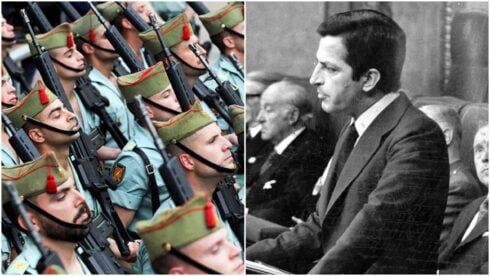
Seisdedos and his men would load their shotguns, and dig trenches across the village’s two entrance roads. This would hamper large vehicles entering, as the anarchists’ greatest fear was the deployment of a squad of armed Guardia Civil.
But by the morning of January 11, no word had arrived. And no real surprise as no peasant could afford to own a telephone, or even a radio.
Might a human on horseback reach the village, to announce the Revolution? It seemed not.
The would-be overthrowers of capitalism were jumpy, because Casas Viejas had its own Guardia Civil barracks – albeit with only four officers – and something would have to be done to neutralise it.
The villagers discussed the situation, and supposed the revolution had happened and they had better act locally.
Seisdedos and the men marched to the Guardia Civil barracks and ordered the occupants to surrender. The Guardia Civil refused. A tense stand-off ensued, but at 2pm – no-one is sure why – the anarchists started shooting and two policemen were killed.
Word had soon got out that, in fact, the revolution had been postponed to a later date and within days a column of Guardia Civil troops arrived from nearby Medina Sidonia.
Now it was the anarchists who found themselves under siege. They retreated to the cottage of Seisdedos on the outskirts of the village.
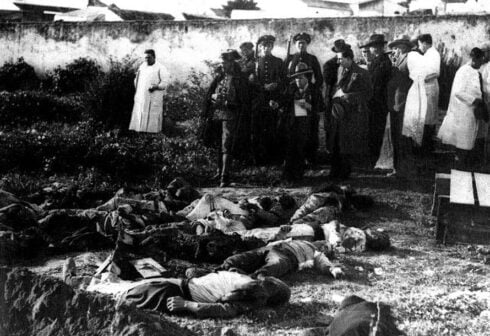
What followed was an indiscriminate massacre.
The Guardia Civil set Seisdedos’ house on fire, and everyone inside was killed, including women and children.
In the ‘rounding up’ which followed the day after, various villagers – some of them not even anarchists – were summarily executed.
It was an appalling massacre that made headlines around the country and the world.
It is not putting it too strongly to say that the Civil War, which broke out three years later, was in part the result of Casas Viejas.
The two sides – Right and Left – allowed emotion and resentment to replace tolerance and reason. 26 people (including women and one child) died in the incident.
In the aftermath of the 1933 massacre, the memory of the Casas Viejas tragedy hung heavily over the community, prompting a desire among residents and local authorities to break with the painful past.
The official change occurred in 1998, when the local council, after years of debate and petitions from residents seeking a new start and a less stigmatized identity, formally decided to rename the village Benalup.
The full name became Benalup-Casas Viejas, acknowledging its history while prioritizing the new, less burdened name – ‘Benalup’ being derived from an ancient Arabic settlement’s name, ‘Ben-al-Lup‘.
By keeping the second part of the name it meant no-one locally forgot what happened.
How is the massacre remembered today?
Today, the events of January 1933 are primarily remembered through local memorials and historical documentation.
The official name, Benalup-Casas Viejas, itself serves as a constant reminder, ensuring the past is not completely erased.
The most significant step was the establishment of the Centro de Interpretación de la Masacre de Casas Viejas (Casas Viejas Victims Interpretation Centre).
It was built close to the home where Seisdedos and his family were killed.
An interesting museum, it offers a ‘neutral, educational space to understand the socio-political context of Spain in 1933’, detailing the sequence of events during the three-day uprising and subsequent massacre.Visitors will enjoy the range of photographs, documents, testimonies, and visual aids to recount the story of the braceros, the rise of anarchism, and the brutal repression by the Guardia Civil.
Click here to read more La Cultura News from The Olive Press.