
HUNDREDS of Costa del Sol residents face losing their homes to make way for a luxury golf development that critics say is an outdated and damaging model of tourism.
Environmental groups Greenpeace and Ecologistas en Accion have joined forces with farmers and expat residents to oppose the project, which would see up to 680 villas and three large hotels built on fertile agricultural land known as the Vega de Maro.
The 150-hectare site near Nerja on the Costa del Sol has become a battleground between environmental protection and ‘corporate greed’, with concerns centred on water use, food security and the loss of long-standing rural livelihoods.
READ MORE: Larios’ ‘corrupt underbelly’ taints Andalucia’s Maro Golf Project, opposition groups claim
Opposition intensified after landowner Sociedad Azucarera Larios (SALSA) confirmed it would not renew nearly 400 long-standing leases, forcing dozens of families to leave land they have farmed – and in many cases lived on – for years.
“Another golf course is the last thing this region needs,” a Greenpeace spokesperson told The Olive Press, calling the scheme ‘outdated and speculative’.
“If we have to choose between locals growing food and tourism for a lucky few, we stand with agriculture,” she added.
The plans, first revealed by The Olive Press in 2020, would transform the area into a sprawling golf complex despite persistent concerns over water scarcity.
At least 80 families are expected to be uprooted, including around 50 farmers and dozens of expat residents.
One of them, British national Richard Jones, 57, says he could be evicted as early as March after spending more than a decade transforming his plot.
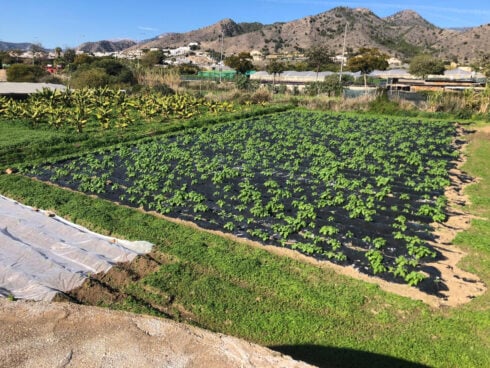
“When I arrived, it was just dust and stones,” he said. “Now there are banana trees and crops everywhere – all planted at my expense. My blood, sweat and tears.”
“I cannot accept corporate bullies pouring concrete over this stunning area and making me homeless,” he added. “All to build three luxury hotels? Is that really what this area needs?”
Residents say they were initially reassured by town hall officials when warning letters were sent out in early 2025.
Those assurances were withdrawn last month when Larios confirmed the leases would not be renewed, leaving some tenants with as little as a month to vacate.
The company declined to comment this week, but has previously said the project would introduce ‘more responsible’ farming practices, claiming many plots were used as private vegetable gardens rather than professional agriculture.
Residents reject that claim.
“They are trying to paint us as outsiders who don’t contribute,” said one expat mother of two. “But we are part of the social fabric here. When I arrived, the local primary school had just ten pupils. Now classes are full, largely thanks to foreign families.”

Campaign group Otro Maro has alleged the planning agreement underpinning the project is linked to a long-standing ‘territorial debt’ between the landowner and the local council, stemming from land transfers for public facilities between 2004 and 2010.
For the project to proceed, the land must first be reclassified. It is currently protected agricultural land and holds Cultural Heritage Site (BIC) status, the same designation as the nearby Maro-Cerro Gordo cliffs.
Ecologistas en Accion confirmed it has submitted formal objections to the town hall and will challenge any attempt to reclassify the land.
Nerja town hall has not responded to requests for comment.
Click here to read more Costa Del Sol News from The Olive Press.