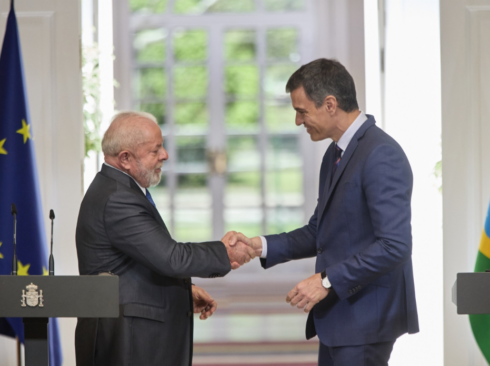


SPAIN’s Prime Minister Pedro Sanchez has been handed a timely political boost after Portugal elected a socialist ally as the country’s new president.
Sunday’s second round of elections in Portugal saw moderate socialist Antonio Jose Seguro defeating rival Andre Ventura, of far-right Chega party, with 66.8 per cent of the vote.
For Sanchez, now in his seventh year as prime minister, the Portuguese result strengthens the informal alignment between Madrid and Lisbon at a time when conservative and far-right parties are increasingly coordinating across borders.
Seguro’s victory followed a concerted, cross-party effort to block Ventura, with senior figures on Portugal’s right quietly backing the centre-left candidate.
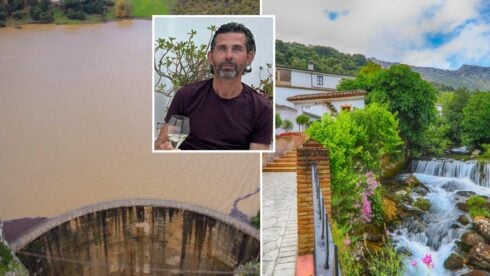
READ MORE: EXCLUSIVE: Former Swedish kayak champion, 63, who braved raging flood waters to rescue his dogs ‘would do it again’ – and hits back at Jerez mayor for labelling him ‘irresponsible’
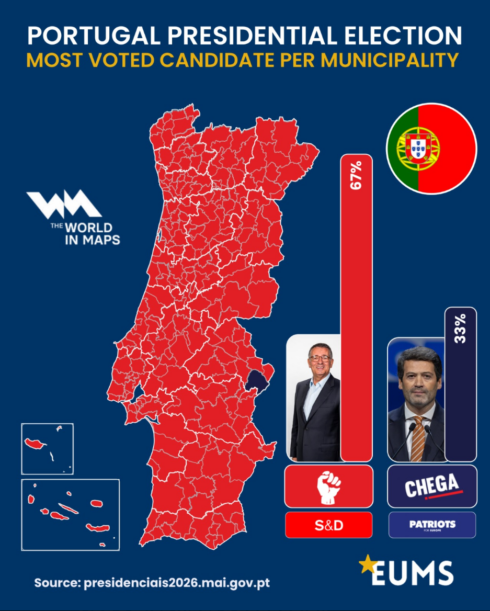
The vote went ahead despite severe storms that caused flooding and disruption across parts of the country last week, forcing some constituencies to delay polling.
‘The response the Portuguese people gave today, their commitment to freedom, democracy, and the future of our country, leaves me naturally moved and proud of our nation,'” Seguro said after the results were announced.
READ MORE: Spain beats co-hosts Morocco and Portugal to host final of the World Cup 2030
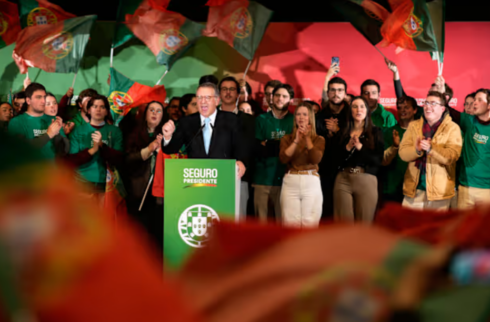
While Portugal’s presidency is largely ceremonial, the result carries wider political significance across the Iberian peninsula, where mainstream parties contain more nationalist and populist forces.
Yet, the Chega party’s performance highlighted the limits of that success.
Founded just seven years ago, the party has made immigration and anti-establishment rhetoric central to its rise, and Ventura claimed the result confirmed Chega as the dominant force on the Portuguese right.
The pattern closely mirrors developments in Spain, where Sanchez is grappling with the growing strength of Vox.
Once strongest among older voters, the party is now attracting younger supporters with no memory of the Franco dictatorship.
Its support has surged since the last general election, and Vox’s rapid rise suggests the far-right is no longer a marginal force.
READ MORE: Spain watches on closely as neighbouring Portugal heads to the polls for crunch presidential election
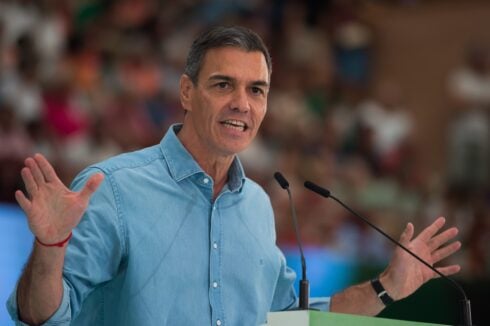
Instead, it is emerging as a decisive player capable of reshaping Spain’s political balance.
Despite these obstacles, Sanchez has repeatedly defied expectations, surviving electoral defects, internal party revolts and no-confidence votes.
Allies and analysts alike point to his resilience and tactical skills, qualities that have helped him outlast rivals who may have once appeared far better placed.
Portugal’s election offers Sanchez a useful counterpoint to the narrative of inevitable far-right advance: a reminder that left-centre candidates can still prevail when contests are framed as a choice between democratic stability and nationalist disruption.
READ MORE: The Olive Press Podcast comes roaring back with a vengeance: Police violence in Portugal, police negligence in Almeria, and curious tsunami drills in Cadiz

Unlike Ventura, Seguro positioned himself as a consensus figure, pledging cooperation with Portugal’s centre-right minority government led by prime minister Luis Montenegro.
Although the presidency has limited executive power, it retains the authority to dissolve parliament – a safeguard that takes on greater significance as populist movements grow.
European leaders were quick to welcome the result, with France’s Emmanuel Macron praising Portugal’s democratic resilience.
EU Commission president Ursula von der Leyen highlighted voters’ determination to cast ballots despite extreme weather, saying: “Portugal’s voice in defending our shared European values remains strong.”
Click here to read more Spain News from The Olive Press.