THE 1,018-page text for the historic Gibraltar treaty has finally been published, and the Rock is largely breathing a sigh of relief.
The agreement secures the vital economic lifeline of free movement for goods and people across the border with Spain, while making significant concessions to Brussels – and Madrid.
But the race is now on to ratify and implement it before April 10, when a hard border is otherwise set to come crashing down.
That date marks the deadline for when the European Union fully activates its automated Entry/Exit System, known as the EES, across all entry points to the Schengen zone.

To prevent the implementation of biometric checks for the 15,000 daily cross-frontier workers, the European Commission is fast-tracking a ‘provisional application’ of the agreement.
This bypasses the lengthy formal ratification process, ensuring the border remains open while the legal technicalities are ironed out.
The signing of the treaty is expected to take place as soon as March, before facing final approval from the European Parliament and the Spanish cabinet in a very tight timetable.
The formal legislative process begins in Gibraltar next week when Chief Minister Fabian Picardo will move a motion in Parliament to officially request that the UK ratifies the agreement.
In London, the UK Parliament must then scrutinise the text under the Constitutional Reform and Governance Act 2010.
However this might not be the formality so commonly supposed – Shadow Foreign Office Minister Wendy Morton has demanded line-by-line scrutiny, raising concerns over dynamic alignment with EU laws.
She specifically challenged the British government on what concrete recourse the UK will have if there is ‘operational overreach by Spain’ on the ground.
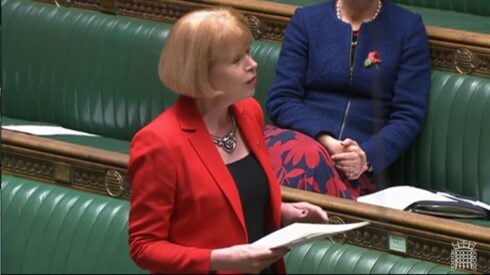
Further red flags being raised by Conservative hardliners include the future adoption of EU Acts listed in the treaty annexes, the lingering shadow of European Court of Justice interpretation, and objections to how British citizens will be treated under the 90-day Schengen rule when entering Gibraltar.
The European route is equally complex, with the European Commission proposing to treat this as an ‘EU-only’ agreement to avoid needing approval from all 27 individual national parliaments.
Instead, the European Council must first officially authorise the signature, a process currently being scrutinised by the Council’s Working Party on EU-UK Relations.
Spain holds massive sway in this arena, meaning the Spanish cabinet must give its backing, steered by Foreign Minister Jose Manuel Albares from Madrid.

Once signed by the Council, the treaty heads to the European Parliament, where committees will dissect it before a final plenary vote grants full democratic consent.
The anticipated signing is expected to trigger the highly symbolic dismantling of the current border controls in a ceremony that Spanish Prime Minister Pedro Sanchez is expected to attend.
Once provisional application begins, Schengen checks will be carried out by Spain’s Policia Nacional at Gibraltar’s airport, but only after local border officials have completed their own processing.
But while the threat of the EES has been neutralised, the fast-tracked provisional application has sparked panic domestically.
The extremely short transition period has local business groups warning of severe economic disruption as they scramble to adapt to the sudden implementation of a new tax framework.
And what of the future of Fabian Picardo, the embattled chief minister of Gibraltar?
Once the treaty is ratified, Picardo – who has already announced that 2026 will be his last full year in power – is likely to come under renewed scrutiny over recent criticisms levied against him.
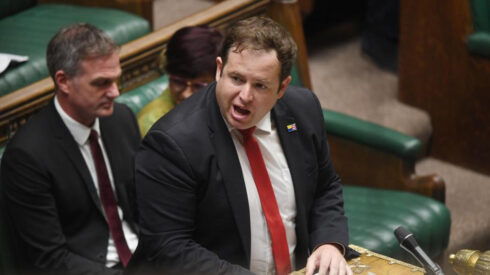
A formal parliamentary answer from UK Minister for Europe Stephen Doughty on February 4 served as a clear warning shot.
Having worked closely with Picardo in the course of negotiating the treaty, he told Parliament the findings in the recent McGrail report were ‘deeply concerning’.
The long-awaited report, from retired judge Sir Peter Openshaw, investigated the circumstances surrounding the early resignation of former Commissioner of Police Ian McGrail in 2020.
Released just two days before Christmas by Picardo’s own government, it excoriated the chief minister, labelling his conduct as ‘grossly improper’ and even ‘sinister’ for his role in interfering with a live police investigation.
“The UK Government expects the government of Gibraltar to implement the necessary reforms quickly and fully,” Doughty declared, adding it would support the Rock in taking ‘any further actions as required to ensure good governance’.
But behind closed doors in Whitehall, patience with the chief minister has evaporated, with insiders telling The Olive Press that Picardo is now viewed as a ‘source of embarrassment’.
According to our sources, London was willing to tolerate the scandals simply to get such a complex treaty over the line, citing ‘other equities’ as the reason for their public restraint.
“The government would have done more had it not been for the treaty negotiations,” the source explained.
The McGrail report followed on from the publication of the Public Auditor’s report in the summer, which found numerous irregularities with the Rock’s finances – strenuously challenged by Picardo.
With the treaty almost out of the door – and the diplomatic cover the negotiations provided – the question remains open as to whether Picardo will be permitted to see out his own timetable for departing Gibraltar’s top job.
Click here to read more Gibraltar News from The Olive Press.