

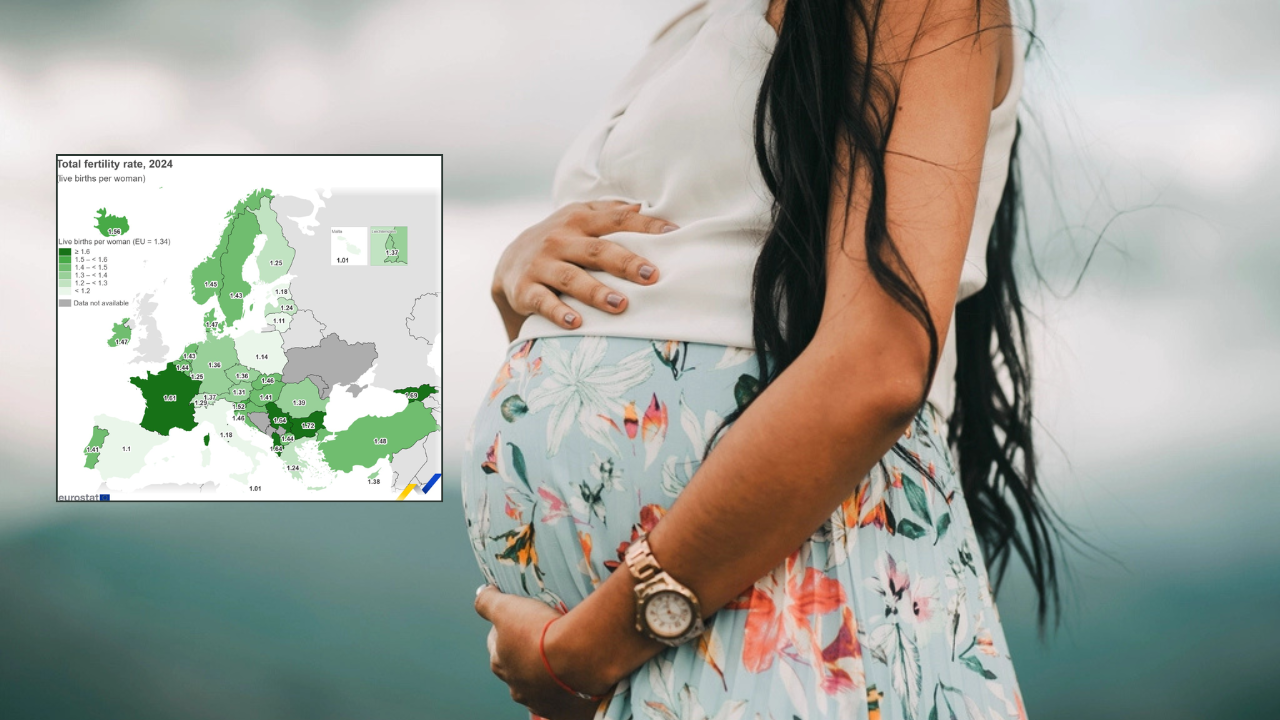
THE full extent of Spain’s fertility crisis has become apparent after it was revealed that more than one in ten children are born to mothers aged 40 or over – the highest figure of any country in Europe.
In 2024, a remarkable 10.4 per cent of all births in Spain were to mothers aged 40 years old or above, according to figures published by the National Statistics Institute (INE).
That percentage is almost double the current European Union average of 6 per cent and sits comfortably above the rate for similar Mediterranean countries such as France (5.6 per cent) and Italy (9.1 per cent).
2024 also saw Spain’s birth rate sink to a historic low of 1.1 children per woman, beaten only by Malta and far below the threshold of 2.1 live births considered as the minimum required to sustain a population without immigration.
While having children later in life is not inherently negative – and often reflects women wanting to further their professional careers – experts say it can also be a warning sign for a country’s fertility trends and wider demographic structure.
Fertility declines significantly with age, meaning couples who delay parenthood often end up having fewer children than planned.
That helps to push national birth rates down and accelerate population ageing, which can have serious implications for the economy.
Experts say the housing crisis is chiefly to blame for the high proportion of births to mothers aged 40 and above.
Skyrocketing rental prices, partly driven by the proliferation of holiday lets and second homes, means young people are forced into waiting later and later to build up the cash to move out and begin to settle down with a partner.
Property prices soared by 12.9 per cent in 2025 – the steepest climb in 18 years, almost double initial forecasts and far outstripping the rate of wage rises.
Combined with the cost of living, that means young adults are having to delay having children until they believe they are in a comfortable economic position.
In Spain, the average age at which young people now leave home is 30, four years later than the European Union average and the fifth worst figure among the bloc as a whole.
Leaving home later inevitably pushes back other life milestones, including starting a family.
Yet the fact that so many people are still having children – albeit later in life – suggests the desire to become parents remains strong, even if economic realities often leave their hands tied behind their backs.
In a rare glimpse of good news, Spain’s birth rate began to climb last year for the first time in a decade.
The INE said 321,164 babies were born last year – over 3,000 more than in 2024.
The largest increases in births were recorded in Madrid (+3.3 per cent) and the Basque Country (+3 per cent).
Click here to read more Spain News from The Olive Press.






Any data on the demographic of these births?
Well it’s unlikely to be British expats!