

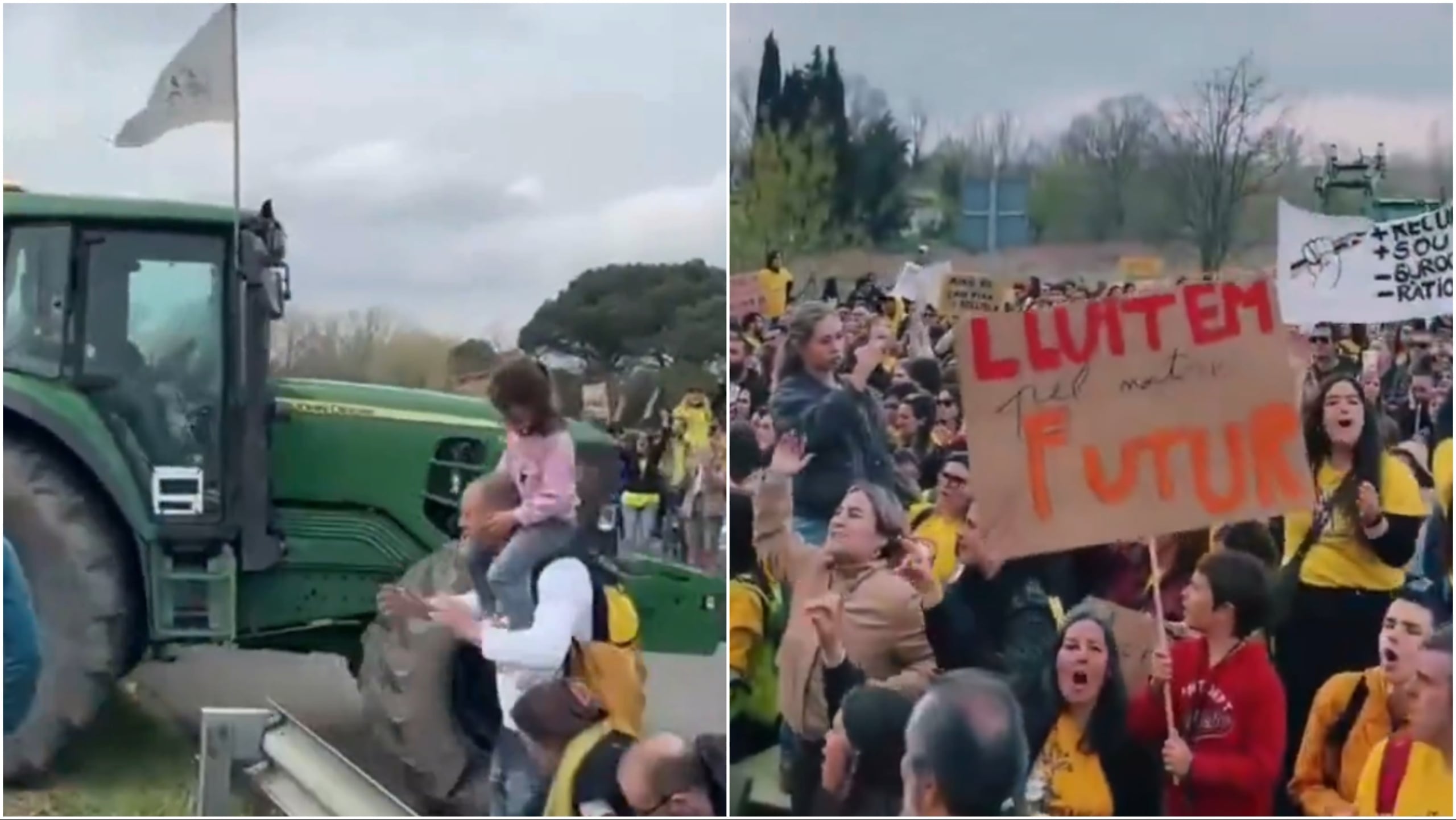
THE AP-7 motorway was cut off for almost three hours on Thursday as hundreds of striking teachers, doctors and farmers staged a joint-protest over pay and working conditions.
Recent protests have caused significant traffic disruptions during peak hours in Catalunya.
Catalunya’s education sector wants better working conditions – and they’re willing to block all the roads to make sure it happens.
Teachers, doctors, and farmers gathered for another round of protests Thursday, blocking major roads as part of an ongoing strike.
The teacher-led stoppages have been going on since Monday morning, with Barcelones and Baix Llobregat as the first marked areas of protests.
Major routes across Barcelona, like the C-31, Ronda de Dalt, Gran Via and the A-2 were all blocked to begin the week-long strike.
Barcelones and Baix Llobregat were the first areas of protests, with an estimated turnout between 8,000 and 25,000 participants – depending on whether you asked organisers or the local police.
Tuesday continued in Tarragona, Terres de l’Ebre and Penedes. The Wednesday protests took place in Lleida, Alt Pirineu and Aran, and Central Catalonia.
Thursday’s coordinated actions took place across Girona, Valles and Maresme. This time, teachers were joined by other occupational workers.
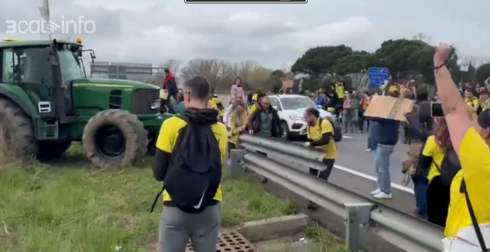
Doctors and farmers from across Catalunya joined in to stand with the teachers protesting for a change.
In Girona, around 700 demonstrators, joined by 40 tractors, blocked the AP-7 motorway near Sant Gregori for three hours.
Although police initially prevented tractors from entering, protesters later found alternative access points.
The demonstration included a symbolic ‘classroom’ setup to highlight concerns about education conditions.
Elsewhere, teachers blocked key highways including the C-58 near Sabadell and the C-32 in Mataro, temporarily halting traffic in both directions.
Protesters used whistles, banners and chants to draw attention to their demands, which include smaller class sizes, reduced administrative workload, and higher salaries.
Union representatives criticized recent agreements as insufficient and called for renewed negotiations with the regional government.
The social movement has garnered national attention after a divide over a proposed education agreement.
Spanish unions rejected the initial proposal due to what they claimed was insufficient in terms of salary, staffing and working conditions.
While some supported the deal, claiming it was a decent starting point, the majority-backed groups decided to move forward with the community-wide strike.
A survey response addressed to all of the Education staff found that 40,000 teachers voted no to the agreement – making up nearly half of all Catalan teachers and 95% of those who participated in the poll.
Demonstrators emphasised that disrupting daily activity is necessary to make their voices heard, warning that further action could continue if their demands are not addressed.
In a public press release on their website, the USTEC posted: “The message is clear. We, the educational staff, reject an insufficient proposal in terms of salaries, ratios, inclusiveness, curriculum and stabilization.”
Click here to read more Spain News from The Olive Press.