
AS Luiz Filipe explained his pairing of chicken broth with eel tartlets, he spoke like a classically trained French chef fresh from a three-Michelin-star kitchen in northern Spain.
In fact, the owner of São Paulo’s leading restaurant Evvai is entirely self-taught, rebelling against his engineer father and teacher mother to master the stove instead.
After a stint with his mentor at destination restaurant Reale in Italy, he knew it: he would be a culinary star back home.

His story mirrors a clutch of chefs turning this unfairly maligned city into one of 2026’s hottest food destinations. With a third star tipped for Evvai – and possibly for equally brilliant Tuju – when the seventh Michelin Brazil guide lands in May, go now before prices rocket.
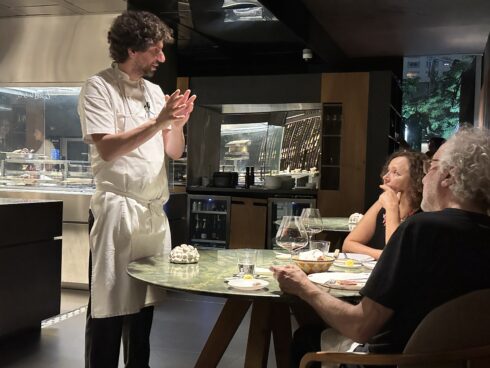
“It’s in the five best global cities to eat,” insists Tuju boss Ivan Ralston, who spent seven formative years at Spain’s El Celler de Can Roca and Mugaritz, once at the vanguard of global dining.
He arrived during a golden era, when Spain was redefining what a restaurant could be: part laboratory, part theatre, part philosophy seminar. “It was an extraordinary time,” he tells me after service, the embers of an amazing 9-course tasting menu still glowing in the open kitchen.
Originally, however, he had different ambitions. Ralston studied music at Berklee College of Music in the United States, intent on becoming a professional musician.
READ MORE: Spain’s best kept culinary secret is hidden among history and flavour in this valley in Cordoba

So what does a double bass teach a chef?
“Music is structure, mathematics, rhythm,” he explains. “It trains you to think in patterns. That helps creativity enormously.” He pauses. “Business is another matter.”
Tuju’s early years were brutal. São Paulo rents are unforgiving, diners demanding and investors impatient. For a time, survival seemed more urgent than stardom.
Yet perseverance paid off. Today, Ralston has bought out his partner and presides over a striking three-storey space where diners are guided through a whimsical, almost narrative-driven journey inspired loosely by Alice in Wonderland but with the flavours unmistakably Brazilian.
When Michelin first arrived in Brazil in 2017, launching simultaneously in São Paulo and Rio de Janeiro, many wondered whether the inspectors would truly grasp the country’s culinary complexity.
Nearly a decade later, the numbers tell their own story.
São Paulo has surged ahead, now boasting 17 starred restaurants and more than 30 Bib Gourmands.
Rio trails, while Buenos Aires and Mexico City remain competitive but distinctly behind.
As for Lima, long hailed as South America’s gastronomic capital, Michelin has yet to formally arrive.
Politics, too, has played its part in shaping the mood. Since the jailing of former president Jair Bolsonaro, optimism has crept back into certain sectors of Brazilian society.
Whether directly linked or not, there is a renewed sense of confidence among chefs: a belief that Brazilian identity, ingredients and technique can finally step out from Europe’s shadow.
Over a week-long culinary tour, a pattern becomes clear. Many of the city’s brightest talents are prodigal sons and daughters who left to train abroad – many in Spain – before returning home.
The parallels with Spain’s own revolution in the 1990s and early 2000s are striking. Then, too, ambitious young cooks ventured to France, the US and the UK, only to come back and reinterpret their own terroir.
“We learned so much from Spain,” says Viviane Gonçalves, the dynamic force behind the restaurant at the Hotel Emiliano.
Gonçalves spent four years cooking in China and two in Bristol before returning to São Paulo with sharpened technique and broadened horizons.
READ MORE: Revealed: The four Spanish coffee shops ranked among the best in the world
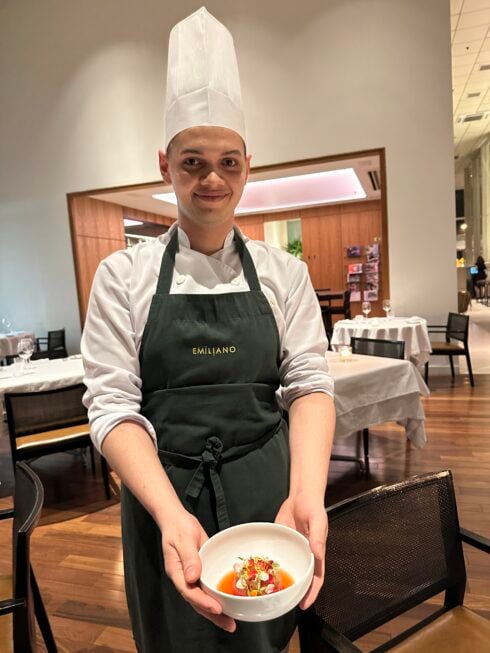
“I love Granada,” she tells me. “The way chefs there work with local produce is inspiring. Spain’s regional diversity is incredible – though Brazil might rival it.”
She has a point. Brazil possesses more biodiversity than any country on Earth. From Amazonian river fish to unusual fruits and coastal shellfish, the pantry is staggeringly rich.
For decades, however, much of it was underutilised in fine dining, overshadowed by European imports and techniques.
Now, that is changing.
Like New York, London or Barcelona, São Paulo offers virtually every global cuisine imaginable.
Italian and Japanese influences are particularly strong, reflecting waves of immigration that have shaped the city’s identity. But what distinguishes São Paulo is how confidently these traditions are being fused with Brazilian produce.
Why such diversity? Gonçalves laughs. “We are a city of 22 million people. We work constantly. We don’t have beaches or mountains here. Our escape is food. Restaurants are our living rooms.”
Another noticeable trait is the intellectual calibre of the chefs. Many have previous degrees or entirely different careers behind them.
At Cais, Italian-born Adriano de Laurentiis and Brazilian co-chef Catarina Ferraz left advertising and architecture respectively in search of something more tangible.
READ MORE: Is Spain’s caña dying? Changing beer habits could spell last orders for the iconic glass size
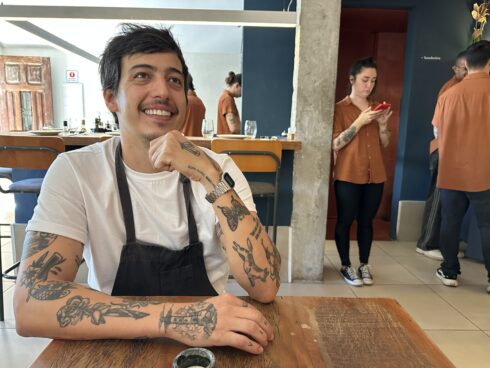
“I was bored and frustrated,” admits de Laurentiis. “Cooking gave me purpose.”
After staging at Tuju, he travelled further afield, including a formative spell at Maaemo in Oslo, absorbing Nordic precision before returning to Brazil.
The result at Cais is thoughtful, produce-driven cooking that feels both worldly and rooted.
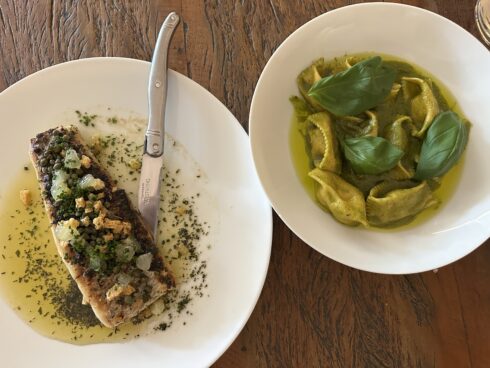
A similar story unfolds at Metzi, where Eduardo Nava and Luana Sabino met in New York after studying music and medicine.
Inspired by time spent in Mexican kitchens, they returned home to craft a Brazilian-Mexican dialogue that is vibrant, generous and unpretentious. It is, quite simply, joyous food.
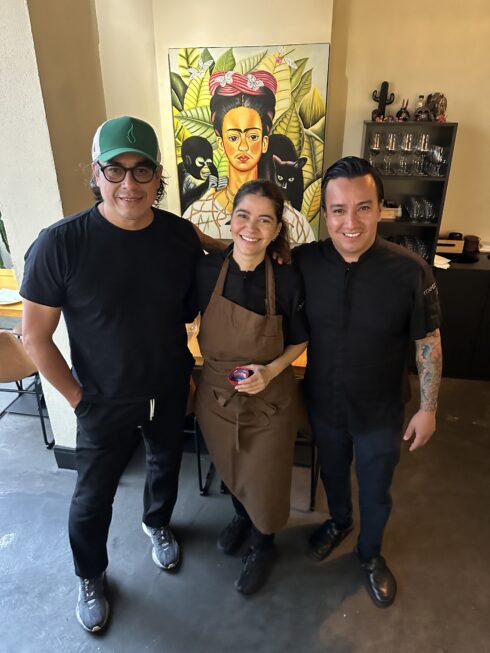
Then there is Kotori, a Japanese-leaning spot run by 25-year-old Guillerme Braganholi. After training locally, he spent a year in Napa Valley absorbing Californian polish before returning to São Paulo.
“Brazil is still catching up with Europe in some ways,” he says. “But we are learning fast. More importantly, we support each other.”
That camaraderie may be São Paulo’s secret ingredient. Unlike older, more hierarchical dining cultures, there is little sense of guarded rivalry here.
Chefs dine in each other’s restaurants, share suppliers, trade techniques. The rising tide, it seems, really is lifting all boats.
Above all, there is warmth. In France, fine dining can still feel ceremonial, even austere. In São Paulo, even at the highest level, there is an unmistakable informality. You are not merely a customer; you are a guest in each chef’s ‘home’.
As my week ends, it is tempting to reduce the city’s ascent to Michelin mathematics or political mood swings. But that would miss the point. What is happening in São Paulo is deeper: a generation reclaiming its ingredients, its confidence and its voice.
And if the rest of the world has not quite caught up yet, it will soon. Book that table now. The three Michelin stars are beckoning in May.
THE MUST VISIT RESTAURANTS IN SAO PAOLO
TUJU
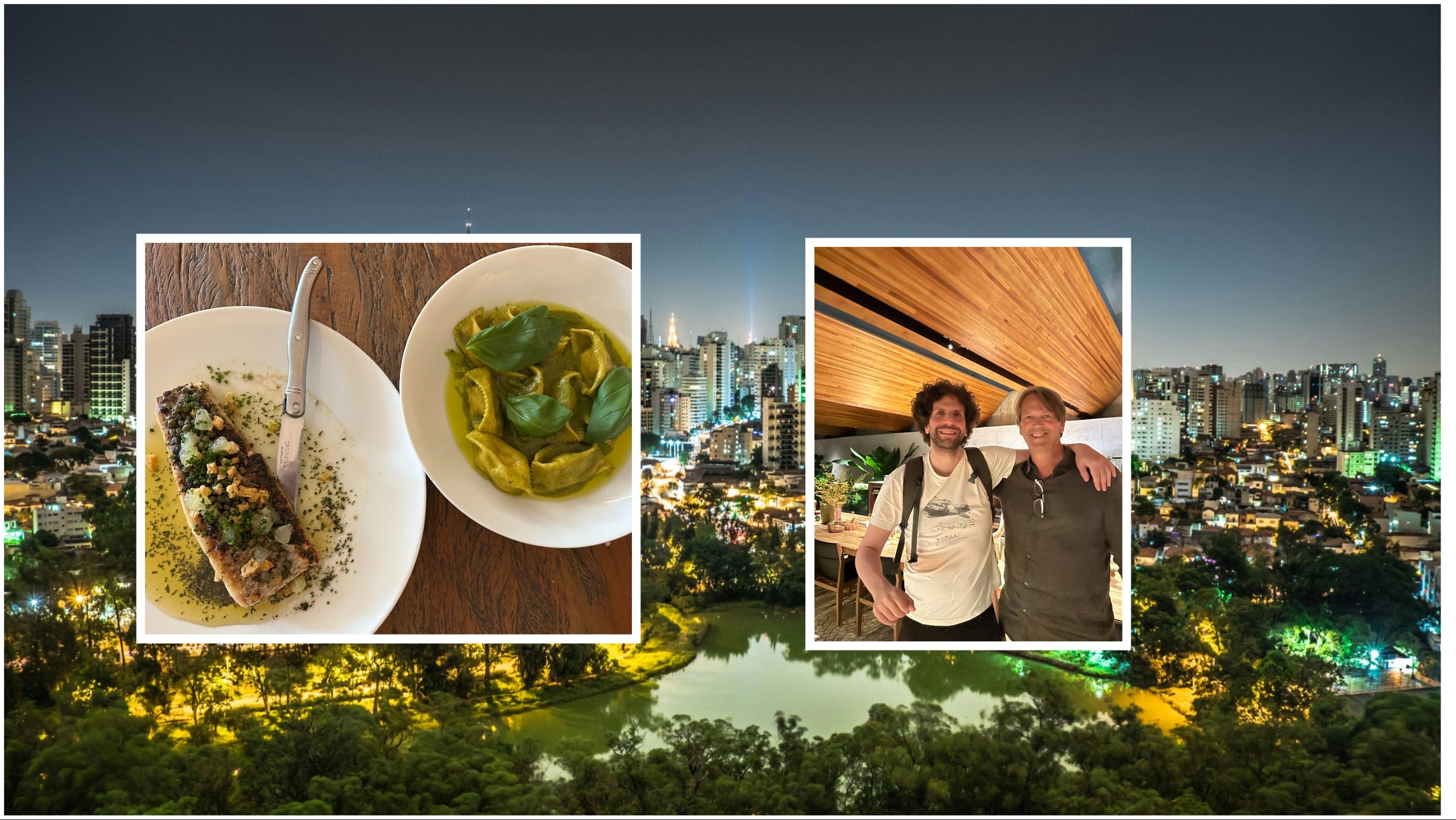
At the end of a cul de sac in the business district you are led into a courtyard by ‘Eddy’ with a very London accent, but clear strains of Brazilian jazz in the background. This is a journey on three floors and at a high table you are first handed a fabulous fino from Jerez and three amuse bouches, one the best sea urchin I’ve ever eaten.
On the next floor it is classic open plan show cooking and you are met by head chef Ivan and his wife Katerina who runs the show. Over three fabulous hours the nine course menu just gets better and better, starting with a seared scallop in a tucupi XO fermented sauce and leading on to Caruncho pork, a rare Brazilian breed with ‘white truffle on top’.
Other highlights include the red snapper and cod roe with a razor-cut watermelon radish and hibiscus sauce, an extraordinary dish that separates into an amazing puddle effect. While the pannacotta with cauliflower, Brazil nut milk and caviar is amazing. The crayfish with palm heart and a red vanilla pil pil vanilla can be smelt before it hits the table.
Ralston is a legend and is a walking wordsmith. “I am half catholic, part Jewish – but totally atheist – my god is temperature …food must be at the right one,” he insists. You can’t fault it here.
EVVAI
Evvai means ‘let’s go’ in Italian and it’s one hell of a roller coaster ride from start to finish – not in an anarchic way, but in the most drilled, organised and slick journey I’ve had in years and reminiscent of Madrid’s Diverxo or Azurmendi, in Bilbao. A Brazilian/Italian fusion menu, there is so much experimentation, only matched by its wine list of over 2000 references.
The level of luxury at Luis Filipe’s palacio of gourmet is simply off the scale. But that is not at the cost of originality, its unusual plate decorations and Japanese-style pine tree in the centre standing out.
The tasting menu is one of the best I have ever eaten and I particularly loved the ‘textured salad’ served on a green beans puree, scooped up off a plinth. The crab dish arrives with its postcard, Batman-style, ‘Holy Crab!’ it screams. And quite rightfully. This is a winner, a crab tartare served on a scallop shell and with a generous spoon of caviar on top. Then it’s a ‘Tramazino’ sandwich from Turin, actually a meringue stuffed with blue fin tuna and slices of pitanga an exotic fruit from the Amazon. You get the picture and thankfully every course – and there were 12 – came with its very own postcard to remember it by. Genius.
CAIS
The coolest low rise cottage in the hip Vila Madalena area is a true soul kitchen. The decor has a 1970s retro feel, while most of the tables line up with a long banquette on one side and the old wooden windows and doors have been nicely restored. Like the TV series the Bear, there are two bosses – male and female vying for the top billing and its cuisine is centred around fresh fish and seafood, while the menu is seasonal with lots of vegetarian dishes and most of the wines are natural wines so all very on a real hipster message.
METZI
Chefs Eduardo Nava and Luana Sabina met at a restaurant in New York, falling in love over the hot stoves and eventually decided to combine their respective culinary talents for the benefit of Sao Paulinos. Their cooking is a combination of Mexican techniques and traditions and Brazilian ingredients – lots of them – with careful attention paid to the seasons and freshness. Expect a nice mescal cocktail to start, while the staff come from a melting pot of nations – Peruvian, Chilean and Mexican.
KOTORI
This is the hip zen spot which clearly works for the kids with nobody over 30 on a Friday night in January. A really buzzy feel, the focus is very much on Japanese culture, with cuisine inspired by a style of oriental cooking which reinterprets Western-style dishes to Asian tastes.
Home of chef Thiago Bañares, the menu is simple and not overburdened – effectively two dozen dishes all rolled into one. It includes things like the amazing courgettes with Banbanji sauce and chilli crunch cooked on the yakitori grill. Scallops – come as a carpaccio in a yellow bell pepper sauce while a duck heart comes on a stick, and with manioc and parsley sauce. Oh and must have: Eryngui Mushrooms in a sauce of a wild cassava and chicken broth.
PICCHI
This elegant Italian was one of the first to win a star in the Brazilian Michelin guide, all the more impressive being the first year of the guide in 2017. A warm space with beautiful stone floors and teak wood walls, it’s great to see a giant wooden ice bucket on wheels full of sparkling wines and champagnes. You can have a la carte or a choice of 3 tasting menus. Mine started richly with sea urchins, seaweed Nuri and a salmon roe. Then a false olive – a grape – marinated with olive oil and put inside. A tortellini stuffed with eggplant and pomodore sauce was a great warm dish for a rainy day. As was the pappadelle of duck ragu with foie gras cream added on top with a small copper pan. A dish of kings!
EMILIANO
Viviane Gonçalves (Chef Vivi) is known as a ‘classical’ chef in Sao Paolo but she has a lot more in her locker from her near decade abroad. She’s a big fan of vegetarian options, such as a smoked cauliflower cream with radish in olive oil and sauteed spinach. I loved her home made tagliatelle pasta in a Beurre Blanc sauce with caviar on top. While her sea bass was a very intricate dish with pak Choi and tiny mushrooms with a Dashi broth, brought back from China. A confit of duck sits in red rice and diced vegetables and a red wine reduction and shallots. The pork ribs in Japanese pumpkin cream were great and very generous. My advice is to go for the great value lunch menu of 3 courses at just 152 reales.
HOW TO GET THERE
Leading Europe to Brazil airline Tap Air flies daily to Sao Paolo and 13 other Brazilian cities with connecting flights coming in from all over Europe. It continues to expand its network recently adding Curitiba and Florianópolis with direct flights from Porto and Lisbon. For more information visit www.flytap.com.
WHERE TO STAY
Jon Clarke stayed at Sao Paolo’s stylish five-star Pulso hotel (www.pulsohotel.com) and the hip grande dame Emiliano (www.emiliano.com.br). He also stayed at the stunning Barracuda hotel in Itacare (www.thebarracuda.com.br).
Click here to read more Spain News from The Olive Press.