

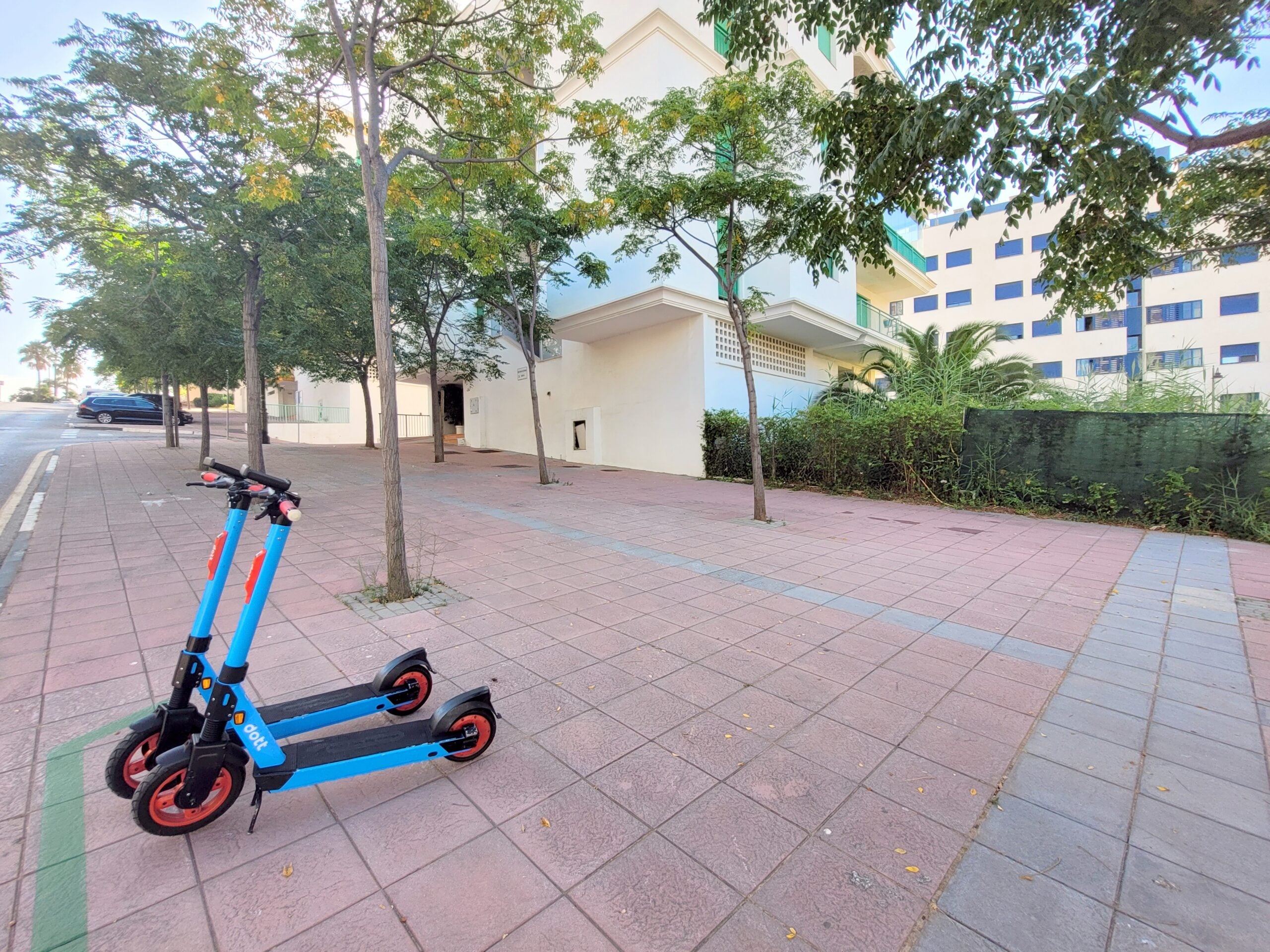
A TOURIST hotspot on the Costa del Sol is tightening the screws on e-scooters as their popularity continues to surge across Spain.
A new regulation came into force yesterday (Wednesday, April 8) in Estepona, bringing a raft of new obligations for riders – including wearing a helmet and obeying traffic rules just like any other road user.
The changes are expected to significantly reshape how e-scooters are used around the town.
According to the Spanish Federation of Personal Mobility Vehicles, around five million e-scooters were in circulation nationwide at the end of last year – a surge the organisation says has fuelled growing tensions between riders, pedestrians and motorists.
READ MORE: Blooming brilliant: Estepona orchids take second place at international conference
Drawn from wider national rules, the Estepona ordinance sets a minimum riding age of 16 for all e-scooter users.
Riders must also carry valid civil liability insurance and have the scooter’s certificate of circulation issued by the manufacturer.
Users are required to follow all traffic signals, signs and lights, and are banned from using mobile phones or headphones while riding.
Where scooters do not have built-in indicators, riders must use hand signals to indicate turns.
E-scooters are strictly limited to one person, with passengers not permitted.
READ MORE: EXPLAINER: Top tips for buying a used car in Spain – and avoiding the scammers that target expats
Riders must also stick to the relevant speed limits, depending on the road: up to 25 km/h on streets with sidewalks, up to 20 km/h on roads without sidewalks, and as low as 10 km/h in specially signposted areas.
The rules also spell out where scooters can and cannot be used. Riding on pavements and pedestrian-only zones is banned, with scooters restricted to roadways and designated cycle lanes.
When crossing at pedestrian crossings, riders must dismount and walk the scooter across rather than riding over it.
READ MORE: The surprising way Franco saved Marbella from becoming a concrete jungle
Riding under the influence of alcohol or drugs is strictly prohibited.
Authorities have also urged riders to wear suitable footwear to maintain control, along with reflective clothing to improve visibility, particularly in low-light conditions.
Penalties for breaking the rules vary depending on the severity of the offence, with fines of up to €1,000 for the most serious violations.
Click here to read more Estepona News from The Olive Press.








Setting rules is fine, but the real issue is who’s going to enforce them. If there aren’t police actually handing out fines to the ones riding like idiots, nothing’s going to change. In the end, we all pay the price for the few who don’t know how to behave.
Marc Correra