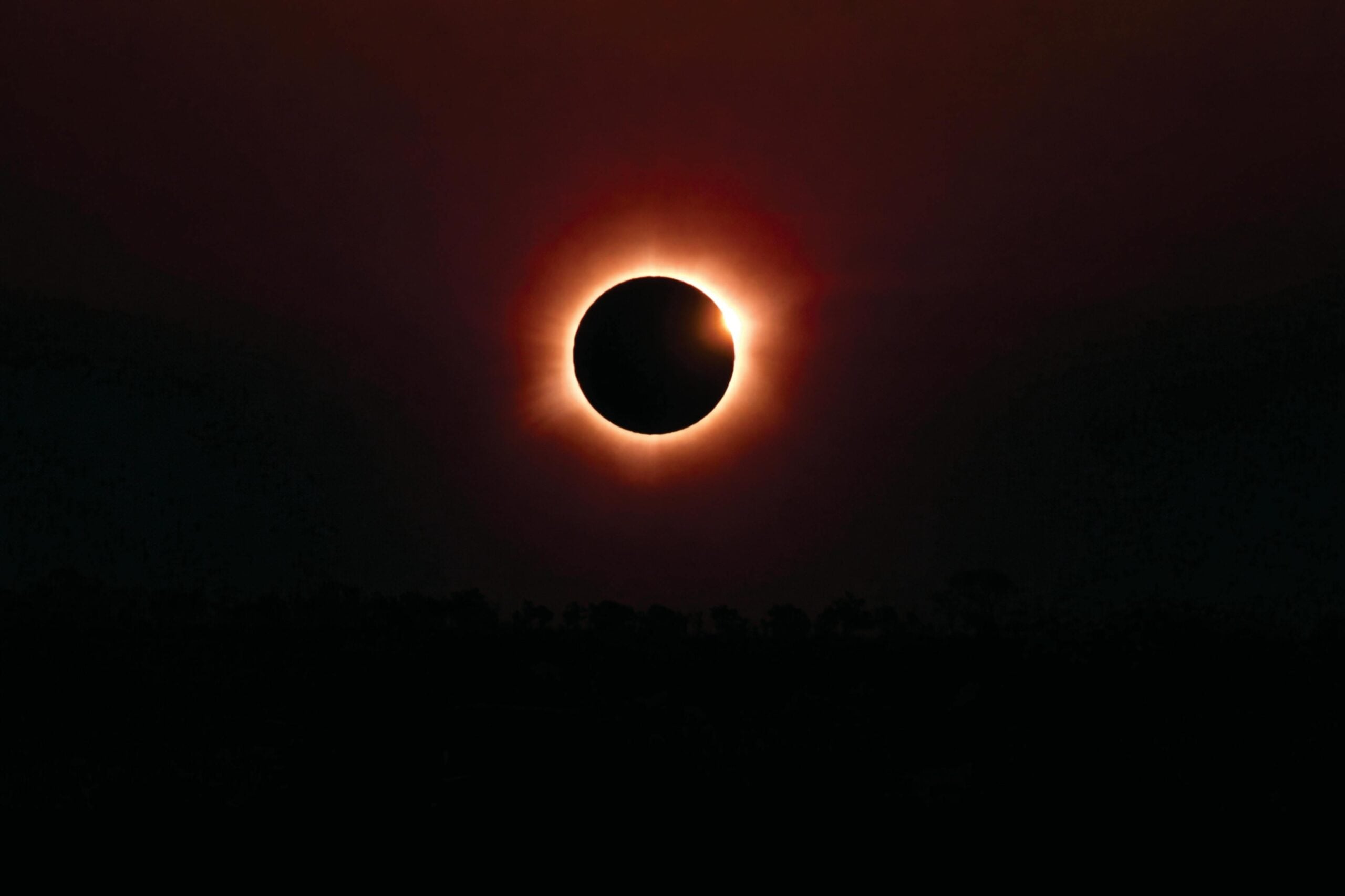
SPAIN is preparing for one of the most spectacular astronomical events in decades – a total solar eclipse on August 12 that will bring a rare moment of darkness to large swathes of the country.
With millions expected to travel in search of the perfect viewpoint, one question is dominating preparations: where is the best place to watch it?
The European Space Agency (ESA) will be closely involved in the event, offering live coverage from some of Spain’s most important astronomical locations.
Alongside a free public event organised with the University of Leon and Leon City Council, the agency will also broadcast from the Teruel Javalambre Astrophysical Observatory, in northern Spain.
Speaking to the National Geographic, ESA astronomer Pedro García Lario explained what makes this eclipse so extraordinary – and why choosing the right location will be essential.
“Watching a total eclipse is not only a visual experience, it is also sensory,” Garcia Lario said. “When it happens, temperatures drop suddenly and a strange breeze can be felt on the skin.
“It is not unusual for people to get goosebumps or even cry because of the emotion of sharing such an experience.”
According to the ESA expert, the key is not simply to look at the sky, but to take in everything happening around you.
During totality, nature itself reacts: birds stop singing, chickens return to their coops, and cows head back to their shelters, before normality resumes just minutes later.
“These are around 100 seconds that we will remember for the rest of our lives,” he said.
The eclipse will be historic for Spain and the wider European continent. A total solar eclipse has not been visible from the Iberian Peninsula for more than 120 years, while mainland Europe has not witnessed one in the 21st century since 1999.
Authorities estimate that around 10 million journeys could take place as people move towards areas inside the path of totality.
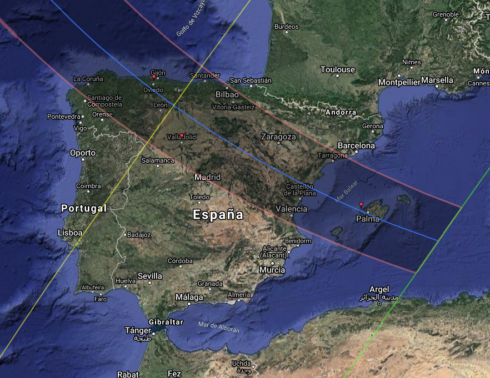
The challenge is made greater because Spain’s two largest cities, Madrid and Barcelona, will not experience the eclipse in its total phase.
Garcia Lario highlighted the dramatic difference between being inside and outside the zone of totality.
“In the area of totality, it practically becomes night-time, while in places where the Sun is only one percent covered, it is still daytime,” he explained.
“The light becomes different and much dimmer, almost as if it were cloudy, but it is still day.”
The partial eclipse will begin roughly an hour before totality and continue for about an hour afterwards, while the total phase itself will be brief – lasting around one minute and 50 seconds at the best locations.
Finding those locations, however, will require careful planning. Because the eclipse will occur close to sunset, the sun will be very low on the horizon, meaning not every viewpoint will offer a clear view.
“It is essential to check that there are no natural obstacles, such as trees or mountains, or buildings in populated areas,” Garcia Lario advised.
“Finding the right observation point requires careful preparation.”
The eclipse will take place during Spain’s August heatwave season, when the risk of wildfires is particularly high.
Garcia Lario urged spectators to respect all local safety measures while travelling and observing the event.
As for viewing the eclipse itself, experts stress the importance of using only certified solar eclipse glasses during the partial phases.
However, once totality begins, viewers can remove their glasses for those few extraordinary seconds when the Moon completely covers the Sun.
Beyond the spectacle, Garcia Lario believes the eclipse has a deeper significance. He highlighted three reasons why the event matters: its ability to inspire future generations of scientists, its potential to boost astro-tourism in Spain’s rural areas, and its reminder of humanity’s place in the universe.
He pointed to Spanish Nobel Prize-winning scientist Santiago Ramon y Cajal, whose interest in science was influenced by witnessing an eclipse as a young person in 1860.
“For millions of people to look at the sky at the same time reminds us of our fragility, but also of our desire to understand and explore – something that is inherent to humanity,” Garcia Lario said.
Click here to read more Environment News from The Olive Press.