

WHAT thread connects the Spanish theatre of the 17th century, Wolfgang Amadeus Mozart, and the modern bullring?
Let’s start with the bullring. If you ever visit one, you’ll notice that the fence keeping the bull away from the audience (not always successfully!) is punctuated by four open gateways.
So far, so good – the toreros have to get into the ring, after all. But you’ll soon spot the wooden barrier shielding each entrance. This is the ‘burlador’, or deceiver.
It serves two related purposes. First, it stops the bull escaping, as the animal’s eyesight can’t distinguish the burlador as a separate barrier – it sees just one continuous fence.
Secondly, it’s a refuge for the matador’s assistants, who can scurry behind it to relative safety when the bull charges.
Many people learn at school about Shakespeare and the Elizabethan theatre. Spain has a similar tradition, which blossomed in the Siglo de Oro, roughly 1520–1620.
READ MORE:
- LIFE IN SPAIN: I Finally Got My Spanish Pension – But What a Long, Sad Tale…
- LIFE IN SPAIN: How Spain’s Christopher Columbus, the world’s greatest explorer, was clapped in chains 525 years ago this week
- LIFE IN SPAIN: The Frank Sinatra incident in Malaga
We sometimes refer to groups of actors as strolling players. In both England and Spain, troupes wandered from town to town, putting on shows wherever they could earn a few coins. Naturally, they gravitated towards local fairs and other busy gatherings.
One of their favourite venues was the coaching inn.
Think about it – with robbers and outlaws in the countryside, and horses that quickly tired of pulling carriages, travellers had to overnight somewhere safe. Inns needed a courtyard wide enough to accommodate the carriage, with galleries of bedrooms running around the central yard.
Actors loved this format. As soon as the horses and carriage were stabled, the troupe staged its latest drama. Guests could watch from their balconies and toss money at the end.
Plays were usually moral sermons. The good were rewarded, the baddies punished. One of Europe’s most successful ever was El Burlador de Sevilla, The Deceiver of Seville.
If you ever see a production of Shakespeare’s Hamlet, you’ll note how visiting actors are pressed into service by the hero. The Deceiver of Seville dates from 1616 – almost the same date as Hamlet.
Don Juan Tenorio is a philanderer, a relentless skirt-chaser. He pursues women all over the city. He is the Deceiver of Seville.
One night, during an assignation, he finds himself in a graveyard. A nearby tomb – or rather its stone statue – comes to life. The spectre warns him: “Don Juan, you are a sinner. Come back to see me next week. If you haven’t mended your ways, I will drag you to hell.”
Suffice to say, Don Juan doesn’t improve, and the drama ends in a morally appropriate climax. The womaniser, and the city of loose morals that shelters him, both end up condemned to the flames.
We know little about the author. His name was Tirso de Molina, and he was a monk. If it seems odd that a monk spent his time writing for the theatre, remember that in the 1600s the Church was the only route open to anyone bookish or inclined towards the arts.
Tirso died in 1648, enjoying three decades of satisfaction knowing his play was a runaway success.
In 1787, Wolfgang Amadeus Mozart was 31 and in a creative trough. (Incidentally, ‘Amadeus’ doesn’t mean ‘loved by God’: it’s the opposite – ‘God-lover’, a latinisation of the German name ‘Gottlieb’.)
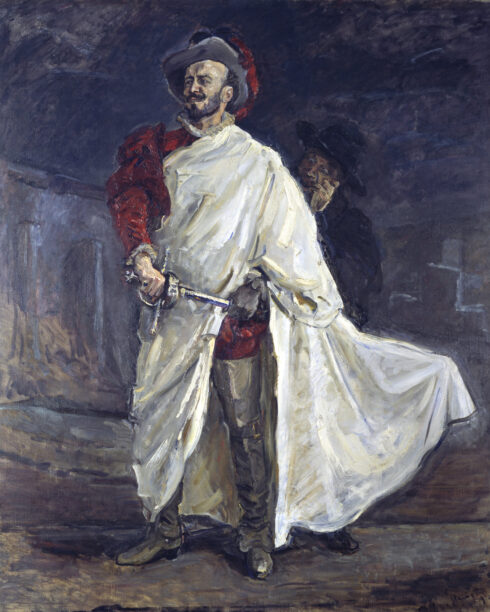
Three years earlier he had been sacked by the Austrian emperor, and was now scratching a living in Prague. Today Prague is the capital of the Czech Republic, but back then it was the Austrian Empire’s second city.
Desperate for a hit to revive his fortunes, Mozart decided to set The Deceiver of Seville to music.
He finished writing it the day before opening night. It was an instant triumph. Yet, nationalism being what it is, you can sit through an entire performance of Don Giovanni (the Italian version of Don Juan) without ever hearing the city of Seville mentioned!
And that’s the twist: a Spanish moral tale born in the Siglo de Oro, inspired by a bullring’s burlador and penned by a monk, ends up transformed into one of the greatest operas of all time – but stripped of almost all its Spanish identity.
Mozart kept Don Juan, kept the drama, kept the damnation… but quietly erased the Sevillian setting. The deceiver lived on, but Seville itself slipped into the wings.
Click here to read more La Cultura News from The Olive Press.