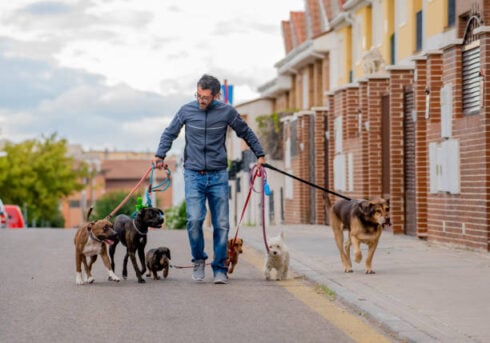


SPAIN is rolling out mandatory dog DNA registration across dozens of towns designed to catch naughty owners who leave their dog’s poop in the streets and walk ways.
The scheme is already being rolled out across a number of municipalities in the Costa del Sol, meaning pet owners now face fines of more than €300 if their animals are not added to local genetic databases.
The system works through a simple saliva swab taken at the vet, which is then logged in a municipal register created to identify owners who fail to pick up after their pets.
Owners receive a small tag once the DNA is recorded.
If police find dog mess left on the pavement, they can take a sample, send it for analysis and match it to the database. This allows officers to identify the owner responsible and issue fines.
The measure is already in place in 81 municipalities across Spain.
In Malaga, towns including Fuengirola, Mijas, Benalmadena, Estepona and Torremolinos have already approved or implemented mandatory canine DNA registration, while others such as Marbella are still studying the idea.
Beyond Andalucia, the scheme is operating in municipalities across the Valencian Community (including Calpe, Xabia and Oropesa), the Balearic Islands (notably Ibiza Town and Santa Eularia), and parts of Murcia and the Canary Islands.
Fines for leaving dog mess on the street vary by municipality, but range from €200 to €10,000.
Councils argue the scheme will clean up the streets, reduce complaints and cut the spread of bacteria linked to uncollected waste.
Most municipalities require owners to pay the cost of the DNA test, usually between €30 and €60.
However, lucky residents in Campello and La Nucia in Alicante – as well as several smaller municipalities in Extremadura and Galicia – can get discounts during the initial rollout of their DNA registration schemes.
Dogs must typically be microchipped, vaccinated and listed on the local pet census before being added to the DNA register.
READ MORE: Revealed: The location of British pub giant Wetherspoon’s first-ever bar in Spain
Local police forces differ in how strictly they enforce the rules. Some take random samples during patrols, while others act only after residents file complaints.
The spread of these schemes has sparked debate in several town halls, with supporters calling it an effective public-health tool and critics warning of unnecessary bureaucracy and cost for owners.
Click here to read more Explainer News from The Olive Press.