

FROM cheaper courts to a buzzing social scene, Spain’s fastest-growing sport is leaving tennis on the sidelines.
If you’ve lived in Marbella for more than five minutes, chances are you’ve already heard the question: “Fancy a game of padel?”
Once a niche pastime played quietly behind hotel walls, padel has exploded across Spain – and nowhere more so than on the Costa del Sol.
Cheaper, easier to pick up and far more social, it’s fast becoming the racket sport of choice for expats swapping baseline rallies for glass-walled courts.
Padel’s roots in Marbella run deeper than many realise. The sport first arrived in Spain in the 1970’s, introduced by the renowned father of padel, Prince Alfonso de Hohenlohe, at the Marbella Club Hotel.
What began as a curiosity has since grown into a nationwide obsession.
Today, Spain boasts more than 17,000 padel courts, one of the highest court-to-player ratios in the world.
Marbella alone is home to over 60 padel clubs, catering to a player base estimated at more than 300,000. With around 20 padel tournaments held annually, the city has firmly established itself as one of Europe’s padel capitals.
READ MORE: Olympic pool, yoga studio and padel courts: Inside the ‘unique’ new mega sports complex planned for Mijas on the Costa del Sol
Padel isn’t just for locals, either. Visitors of Spain’s sunny southern coast can appreciate the ability to play outdoors year-round.
“Coming from cold Norway, playing outdoors in Marbella feels amazing,” says 24-year old Norwegian student, Celine.
Is there a switch from tennis to padel?
Before tennis lovers panic, the sport isn’t disappearing anytime soon. Marbella still offers around 14 tennis courts, many sharing facilities with padel clubs.
But the shift in racket-swinging habits is hard to ignore. Simply put: padel fits modern expat life better – and tennis is no longer the default choice.
Lower costs, better value
Cost matters, and padel pulls ahead. For many expats, the price of play is one of the first reasons why padel starts to look attractive.
Padel is typically played in doubles, meaning court hire is split between four players.
Tennis, by contrast, is usually singles – and coaching costs can quickly add up.
READ MORE: Spain’s far-right Vox party launches bid to block Gibraltar from joining international rugby and padel federations
Take Marbella for example. At Los Naranjos Padel Club, court hire costs around €22 for 60 minutes, €33 for 90 minutes and €44 for two hours.
Split between four players, that’s a manageable expense for a regular social sport.
Tennis court hire, on the other hand, can range from €22 to 106 per match.
Private tennis lessons often start around €65 an hour, which is before factoring in regular court time.
For expats looking to play several times a week, the math is simple: padel makes far more financial sense.
READ MORE: New shooting in Marbella: Man is gunned down at padel club just days after Christmas Eve attack
Easier on the body

Another big factory is injury risk – or rather, the lack of it.
Padel courts are smaller. Serves are underarm, and the game relies more on positioning and quick reactions than raw power.
That makes it particularly appealing to players returning to sport later in life, or those who have already collected a few tennis-related injuries over the years.
“It’s competitive, but without being punishing,” is a phrase often heard among converted padel players.
The knees, shoulders and elbows tend to survive padel far better than long tennis matches, especially on hard courts. For many expats, it’s the difference between playing occasionally and playing at all.
READ MORE: Pictured: Eva Longoria plays in padel tennis tournament in Spain after making permanent move to Marbella
Designed for beginners
Unlike tennis, which can feel unforgiving for newcomers, padel is famously beginner-friendly. Thanks to its enclosed court and glass walls, rallies last longer almost immediately, even for first-timers.
There’s no need for a killer serve, perfect footwork or years of lessons to enjoy yourself. Within a session or two, most beginners are enjoying proper rallies, which builds confidence and keeps people coming back for more.
For expats new to Spain, that low barrier to entry is crucial. Padel doesn’t just welcome beginners; it’s built for them.
READ MORE: World first: Spanish woman in Barcelona receives first ever face transplant after euthanasia volunteer makes donation
Padel for all levels
This is where padel really stands out.
Whether you’re picking up a racket for the first time or playing three times a week, there’s a place for you. Most clubs offer introductory sessions, group coaching and mixed-level games, alongside competitive leagues for those wanting more of a challenge.
Coaching is widely available in English, making padel particularly accessible for international residents. In a city as global as Marbella, that matters.
READ MORE: Spain will ban social media for children aged under 16 to protect them from ‘digital Wild West’
Built-in social appeal
If tennis is traditionally seen as a solo pursuit or serious competition, padel is unapologetically social.
The doubles format encourages teamwork – and plenty of banter. Matches are often followed by coffee, fresh juices or even beer on the terrace.
Sometimes, the post-match chat lasts longer than the match itself.
Many clubs organize mixed-ability games, league nights and WhatsApp groups, making it easy to find players and set up matches.
For expats building a new social circle in southern Spain, padel has become one the of the easiest ways to meet people organically – without the awkwardness of formal networking events.
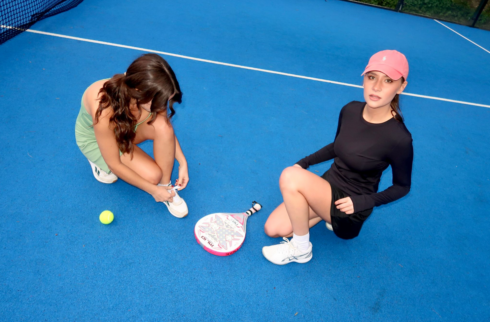
“I got a bit addicted to padel because it’s easy and you don’t have to be a pro to enjoy it,” Celine explained. “I’ve made so many friends through the sport!”
READ MORE: Brilliant breakthrough as Spanish scientists successfully restore vision to blind man using new brain implant
Marbella’s padel hotspots
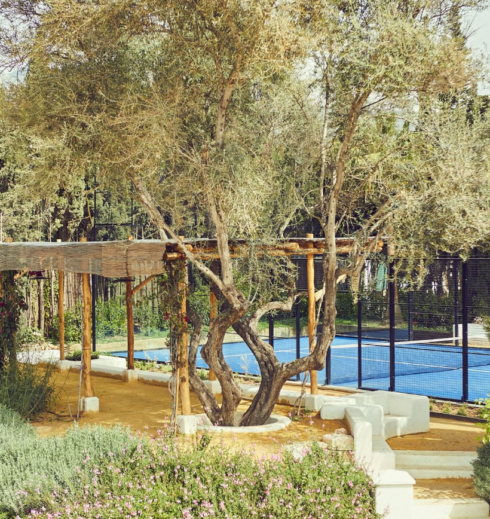
Since the first court appeared at the Marbella Club Hotel, the city has grown into one of Spain’s padel strongholds, with clubs to suit every taste and budget.
A recent roundup by local real estate firm CIMN highlighted several standouts:
READ MORE: New cancer cases in Spain are expected to exceed 300,000 for the first time in a single year
More than a sport
In Marbella and across Spain, padel has become part of everyday life. It’s pencilled into weekly schedules alongside school runs, work meetings and beach walks. With courts scattered across the city, it’s easy to gather a few friends and get playing.
Matches lead to friendships, tournaments build long-lasting fitness habits, and the setting – with mountains, sea and sunshine never far from view – does the rest.
Tennis still has its place. But for many expats, padel fits modern life better: cheaper, easier, kinder on the body, and far more social.
In Spain today, padel isn’t just winning over tennis players. It’s becoming the social glue of expat life.
Click here to read more Marbella News from The Olive Press.