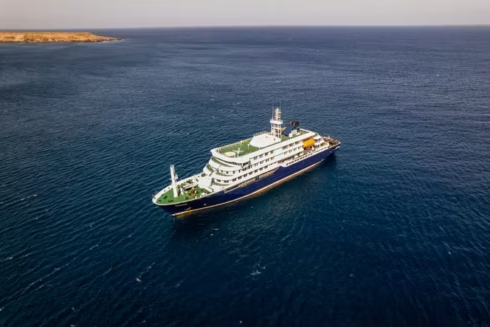

TWO Guardia Civil officers have been killed after a crash involving two vessels during a high-speed pursuit of a suspected drug-running speedboat off the coast of Andalucia.
German Perez and another unidentified officer died following the collision, which took place around 130km off the coast of Huelva.
But what are ‘narcolanchas’, the name given to the high-speed vessels used by trafficking gangs that were involved in the horror cash?
Since 2018, narcolanchas – narco launchers in English – have been banned in Spain.
The boats, which operate in the Strait of Gibraltar as a link between narcotic production in Morocco and an entry to the European market in Spain, are semi-rigid or heavily inflatable boats, normally weighing over 5,000 kilograms.
They are usually over 12 metres long (some have been found to extend to 16 metres) with the capacity to carry up to three tonnes of drugs.
The greatest asset of the narcolancha is its speed – the vessels have a maximum speed of 70 knots, around 130kmh, which is often far quicker than the boats used by the Guardia Civil.
Narcolanchas often use up to four engines operating at between 250 and 450 horsepower each.
The powerful engines are also thirsty, collectively consuming up to 55 litres of fuel per hour, forcing smugglers to either carry petrol on board, modify the design of the boat to accommodate a larger fuel tank, or use smaller boats called petaqueros to refuel out at sea.
Driving a narcolancha is a lucrative business, too – skippers can earn up to €15,000 per trip depending on the quantity of drugs carried on board, making it one of the best-paid roles in the drug-smuggling world.
Two Guardia Civil officers were killed in the line of duty two years ago in similar circumstances.
The narcolancha involved in their deaths off the coast of Cadiz was 14 metres long, weighed five tonnes, and had three engines offering a combined 900 horsepower.
The vessel was also equipped with high-tech radar, radio, GPS and a night navigation system, allowing the craft to operate at all hours.
Click here to read more Spain News from The Olive Press.