

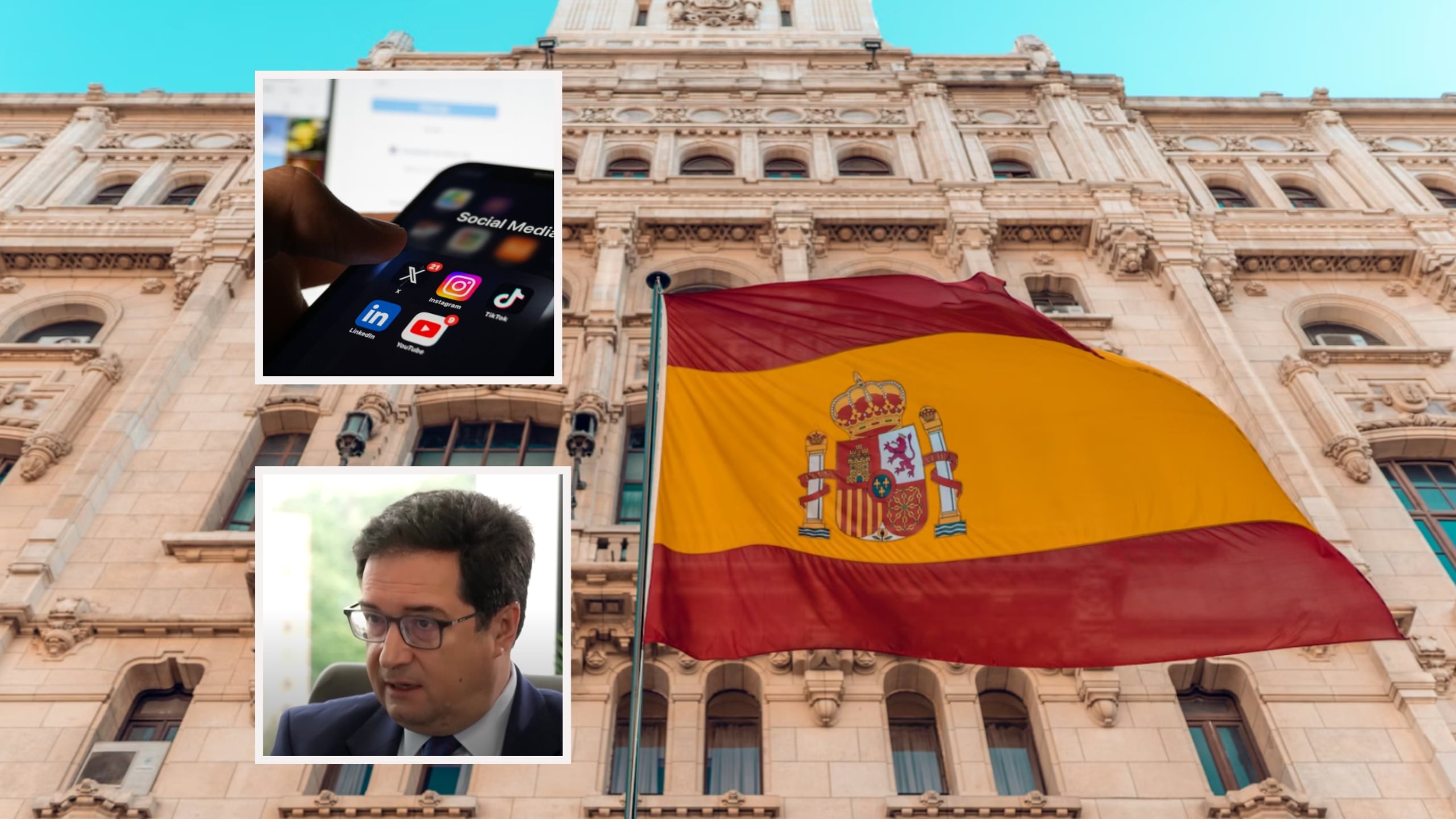
EU representatives plan to follow Spain’s lead in establishing regulations against adolescents’ use of social media, although some studies and tech execs believe the threats are low.
Youths facing cyberbullying, sexual harassment and AI-deepfakes targeting minors have pushed Spain’s urge to ban social media.
Since the initial plan to ban the teenage use of social media was first announced in February, the bill has already begun to move through parliament.
Key measures include a mandatory age verification to prohibit minors under 16 from registering on social media platforms, along with criminalising intentional manipulation of algorithms that target minors with harmful content.
READ MORE: Spain will ban social media for children aged under 16 to protect them from ‘digital Wild West’
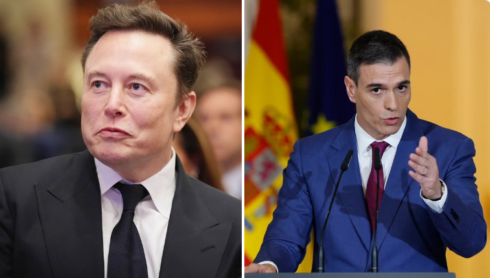
Despite severe backlash from X owner Elon Musk, who called Pedro Sanchez both a ‘tyrant’ and a ‘totalitarian,’ the Spanish government is holding firm on its stance against underage social media use.

A tracking system is intended to monitor ‘hate and polarisation’ in the ways digital platforms use social applications.
Additionally, the new legislation aims to hold big tech executives responsible for any harm caused on their platforms, which includes hate speech and child pornography.
Those execs who fail to do their part in removing illegal content could be held liable for criminal charges.
The biggest issue young people are faced with when using these social applications are the impact on mental health.
A 2026 article on patterns of media associated with Spanish children found that the country’s rate of underage suicide increased by 57% from 2020-2021.
READ MORE: Spain’s PM Pedro Sanchez announces new tool to measure hate speech on social media
Just in October 2025, a school in Sevilla faced outrage after a 15-year-old student was alleged to have been driven to suicide due to cyberbullying.
The Fiscalia Superior de Andalucia initiated 75 reform proceedings in 2024 for bullying incidents with perpetrators between the ages of 14 and 18.
Researchers have cautioned that certain exposure to social media has the power to increase suicidal tendencies, a big reason why the Spanish government is pushing the bill.
Continuous problems concerning sexual harassment are also commonplace online.
The surge of AI has created a toxic online sphere with the creation of generated deepfakes that target young girls.
Spain’s digital transformation minister, Oscar Lopez, said in a comment to Reuters that the rights of millions of people shouldn’t come from ‘the profit of four tech companies.’
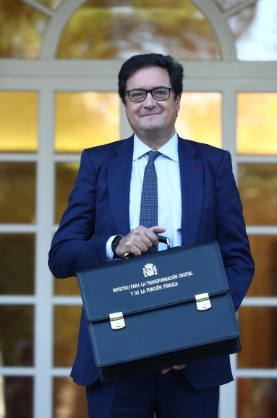
Rather than allowing individual countries to navigate regulations separately, Lopez said Spain wants to push for an overarching approach.
Lopez warned that a ‘laissez-fair approach’ wouldn’t work and that it would be easier to enforce rules across all EU citizens.
When questioned about the use of pseudonyms online should be identified if the user is accused of committing a criminal offense, Lopez agreed.
‘What isn’t legal in the real world cannot be legal in the virtual world. Full stop,’ Lopez stated.
Lobbying continues from the tech industries, but Spain is not alone in its steps towards outlawing social platforms for kids.
Australia was the first to make the unprecedented decision to forbid the underage use of social apps in 2025, with France and Greece following suit with laws to be fully established by 2027.
More recently, European Commission President Ursula von der Leyen announced the upcoming Digital Fairness Act (DFA), which aims to target addictive practices made through the use of social media.
In her speech at the European Summit on AI and Children in Denmark, von der Leyen criticised tech providers and the deliberate choices they make to profit from the vulnerability of kids, to ‘cash in on their fears and moments of self-doubt.’
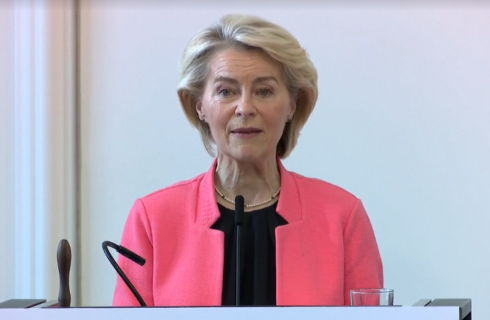
“So this is more than just technical questions of media use. It is about childhood itself, and what children mean to us. Children are not commodities, and no tech company in the world should be allowed to treat them as such,” the EU Commission’s President said during the Keynote address.
DFA is said to become a ‘one-size-fits-all’ approach to platform management, which has broadcast and media industries concerned about its impact on democracy-sensitive sectors.
Outlets like the European Publishers Council, Association of European Radios, Motion Picture Association (EMEA) signed a letter along with the Association of Commercial Television and Video on Demand Services in Europe (ACT) to EU tech chief Henna Virkkunen.
READ MORE: Police in Marbella launch week-long crackdown on drink and drug driving
Their request is that the DFA uses evidence to prevent the disruption of the smaller businesses who support media journalism and creative content.
Some researchers have a different perspective, using data to indicate that social media may not be that bad for teenagers.
One study claims that minors are mainly using digital environments in a passive way, to look at other users’ content rather than posting their own.
READ MORE: Popular Mallorca town swamped with tourists who now outnumber residents
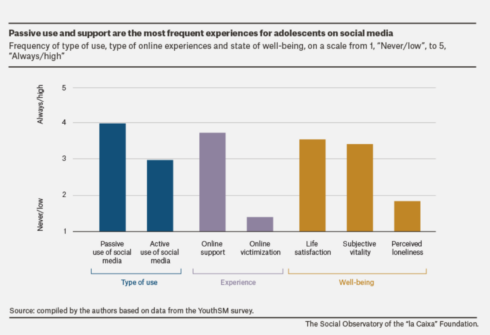
In a direct contrast to what the Spanish administration is claiming, a graph made by La Caixa Foundation depicts a different view of social media, one that shows teens are more likely to get online support and life satisfaction rather than victimisation or perceived loneliness.
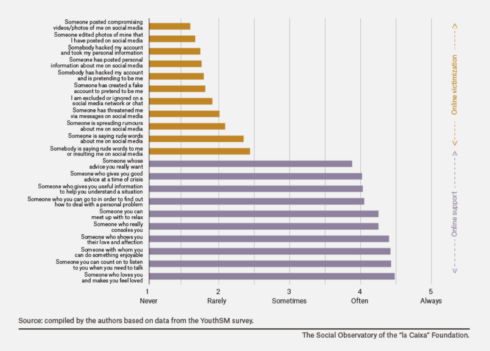
Data from the YouthSM survey published a separate graph that displays the frequency of adolescents who encounter various forms of support or victimisation online, which shows a higher rate of support over online bullying.
A 2024 report found that the social apps most commonly used by teens are WhatsApp (99.6%), followed by Instagram (95%), TikTok (80%), X (22.5%), and Facebook (21%).
People can call Samaritans in Spain between 10am and midnight on FREEPHONE 900 525 100 for a confidential service in English?
If you need to talk to someone after midnight, call the low-cost UK Samaritans overseas line on 0044 330 094 5717 which operates a 24hr service.
Spain’s national suicide helpline 024 also offers a service in English
Click here to read more Spain News from The Olive Press.