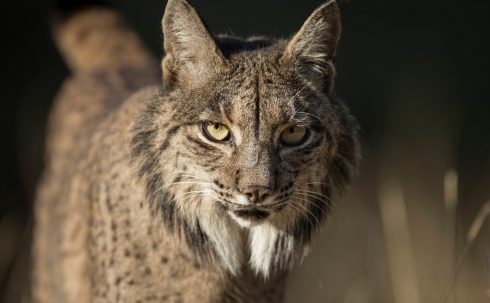

TWO Iberian lynxes have given birth to five cubs in northern Spain – the first known births in the region since the species was brought back from the brink in 2025.
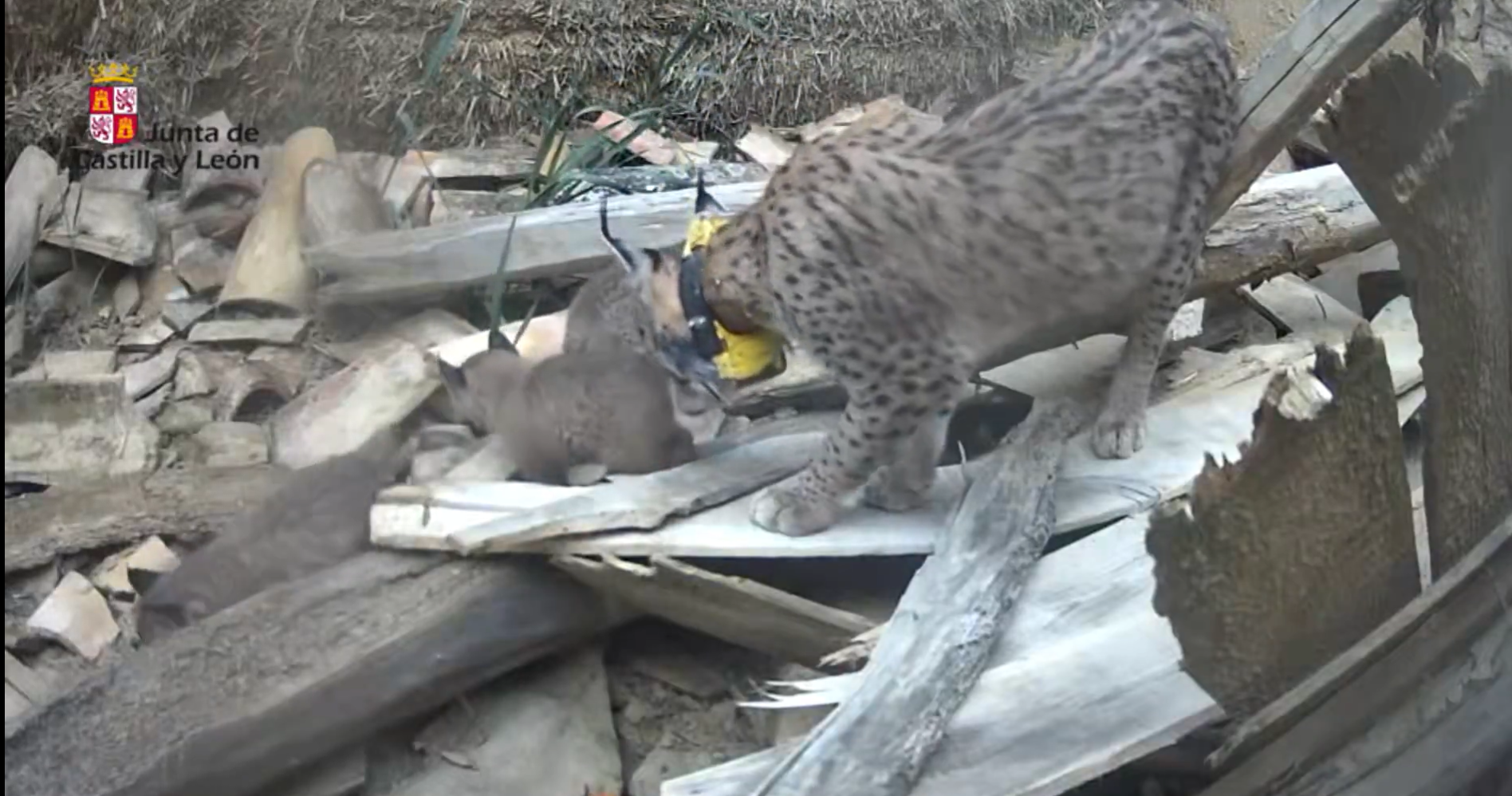
Footage shows Virgo the lynx and her three cubs exploring a rural property in the Cerrato area of Palencia, Castilla y Leon, with the mother gently guiding the young animals through their surroundings.
The historic births, which took place between March and April this year, are being described by conservationists as a major milestone for one of Europe’s most endangered wild cats.
The two mothers, Virgo and Valeriana, were part of a reintroduction programme designed to restore a species that had been absent from northern Spain for decades.
Virgo is reported to have had three cubs, while Valeriana gave birth to two more, bringing the total to five young Iberian lynxes now in the region.
Wildlife teams monitoring the area using GPS tracking collars confirmed the births, calling them a strong sign of the success of long-term habitat restoration and breeding efforts.
Once considered the world’s most endangered feline, the Iberian lynx was pushed to the edge of extinction by habitat loss, road collisions, and the collapse of wild rabbit populations, its primary prey.
Conservationists credit the recovery to a captive-breeding programme launched in the early 2000s, when numbers dropped below 100 individuals.
Carefully managed breeding centres across Spain helped rebuild the population while maintaining genetic diversity.
Alongside this, extensive habitat restoration work was carried out across southern and central Spain, focused on restoring Mediterranean scrubland and increasing rabbit populations affected by disease and land-use change.
Reintroductions were then carried out in carefully selected areas, supported by GPS monitoring, soft-release enclosures, and strict protection measures.
Officials in Castilla y Leon say the births are an early indication that reintroduced populations are now beginning to reproduce naturally in the wild, a key milestone in the species’ long-term recovery.
Click here to read more Animals News from The Olive Press.