
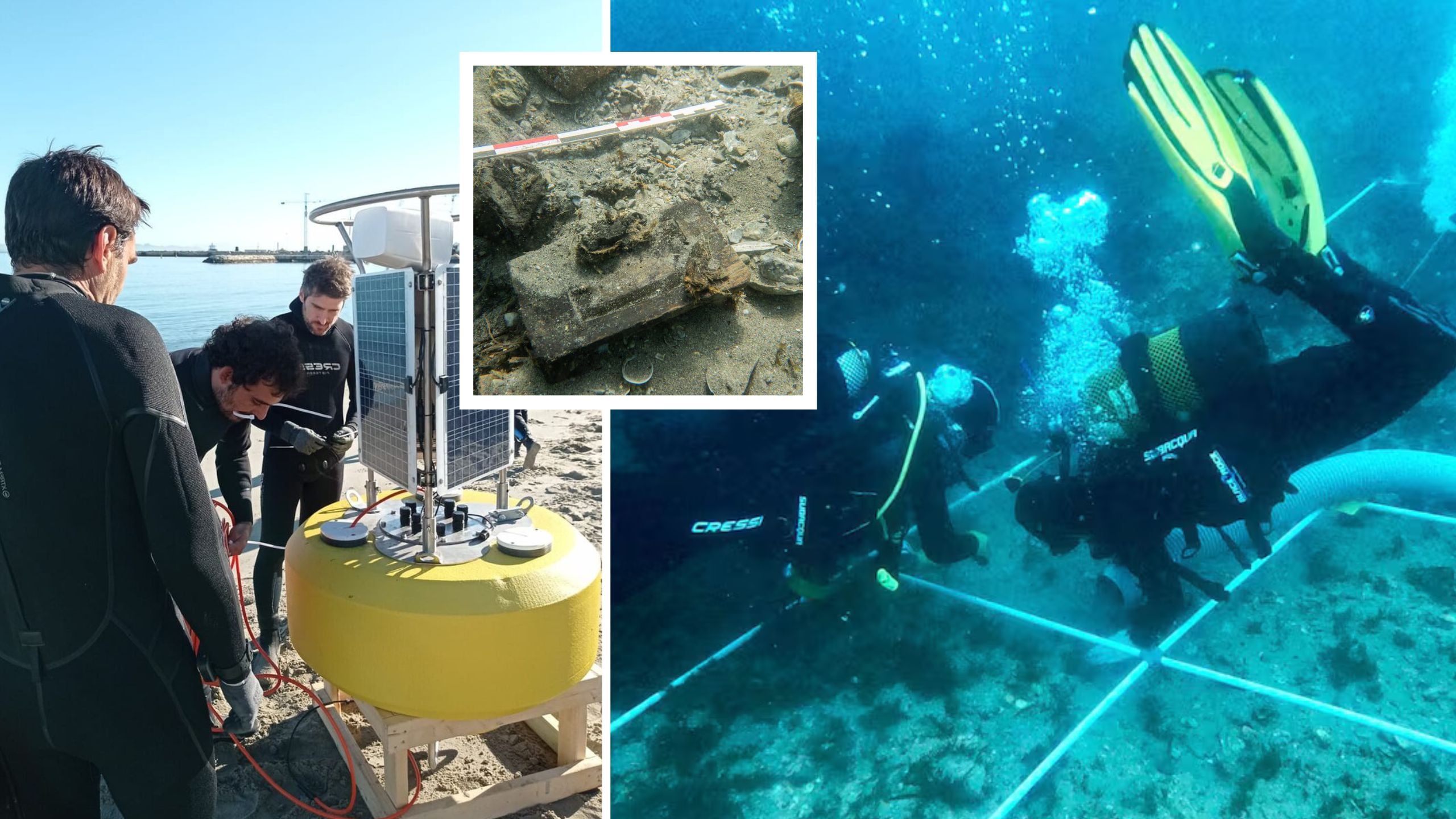
DIVERS have uncovered 34 underwater wrecks in the Bay of Algeciras, including the remains of a vessel dating back to the 5th century BC.
The discoveries come from the Herakles Project, led by University of Cadiz researchers Felipe Cerezo Andreo and Alicia Arevalo Gonzalez.
The project took place between May 2020 and March 2023, aiming to expand knowledge of the underwater archaeological sites in the Bay of Algeciras.
The team identified 34 shipwrecks along with 151 previously undocumented archaeological sites.

They have now published the results of their research in the study Between the Pillars of Hercules: Underwater Archaeology of a Privileged Space. The Bay of Algeciras: The First Results of the Herakles Project.
Among the most remarkable finds is the Timoncillo I wreck, believed to be from the 5th century BC, making it one of the oldest discovered in the area.
Despite intensive inland archaeological research, the Bay of Algeciras has seen little in-depth study of its underwater heritage, until now.
In just two years, researchers added over 150 new sites to the 125 already known. Previously, only four underwater locations had been identified, with just one confirmed shipwreck, the 17th century Ballanera.

The newly found sites cover different centuries, from the Punic and Roman periods to medieval and modern times. Around 80% of the approximately 2,000 documented shipwrecks were merchant vessels.
One remarkable find is the Puente Mayorga IV, an 18th-century gunboat preserved in shallow waters. Experts describe it as ‘an exceptional and rare example of naval construction’.
The discovery offers a valuable insight into a type of vessel that is ‘very little known archaeologically.’

However, the findings also raise concerns.
Much of the underwater heritage lies at depths of less than 10 metres and is increasingly being exposed due to ‘changes in seabed conditions caused by port works and climate change’.
This leaves the sites vulnerable to damage.
Although the bay has official protection status, researchers say ‘deterioration is already significant in practice’.
They state that the impact ‘could cause irreversible damage to its conservation.’
Click here to read more Spain News from The Olive Press.