
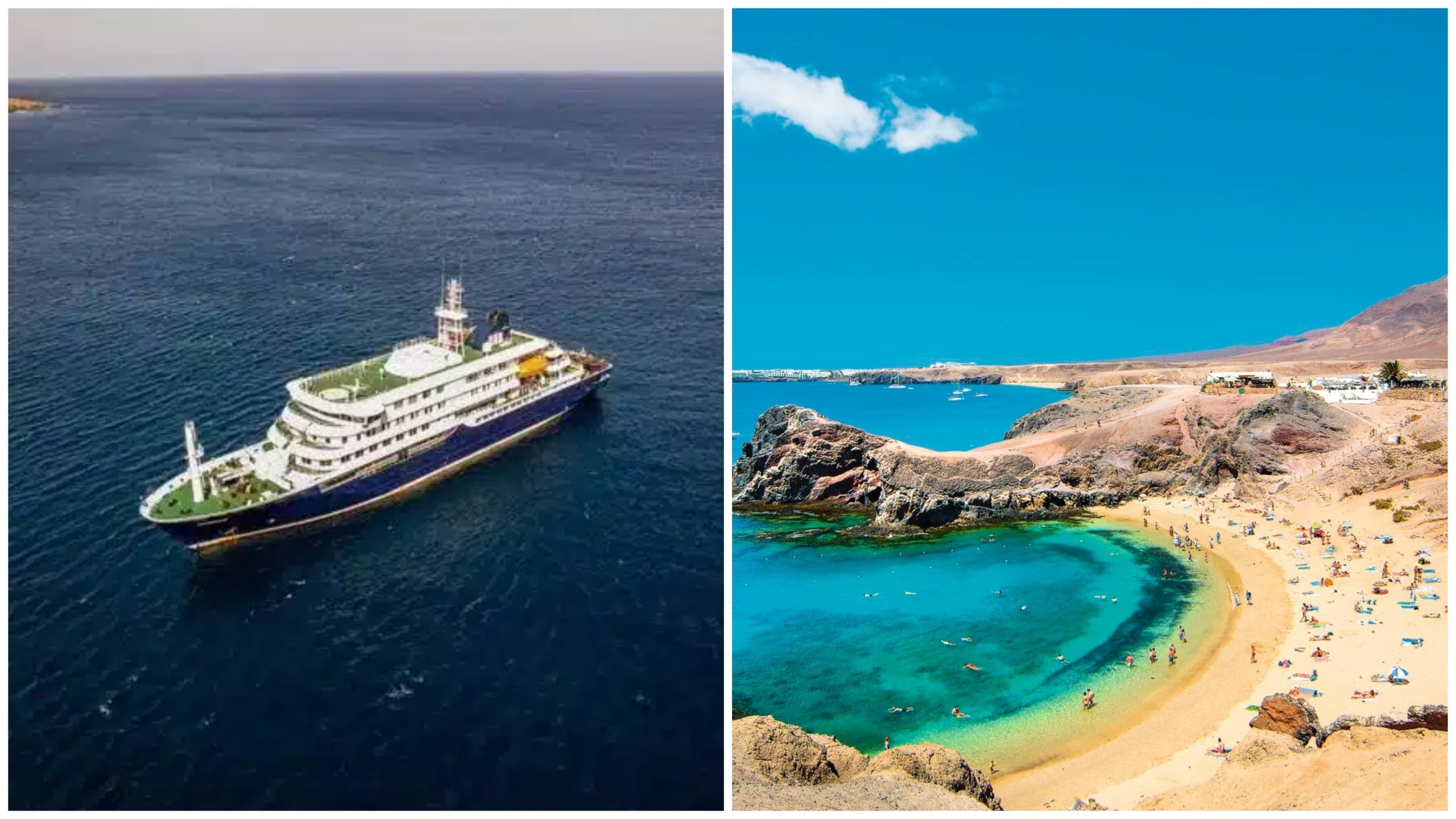
A CRUISE ship stricken by a suspected hantavirus outbreak that already killed three passengers could next head for the Canary Islands, its operator has suggested.
Oceanwide Expeditions said it was ‘floating’ the option of sending the MV Hondius, currently held off Cape Verde, to Las Palmas or Tenerife so passengers can disembark and ‘new medical tests’ be performed.
Sources at Spain’s Health Ministry told Cadena Ser that Spanish officials are monitoring the situation in case the ship needs to dock in the Canary Islands.
The developments follow seven reported illnesses on board, with the World Health Organisation (WHO) confirming two cases through laboratory tests.
Around 150 people, including two sick crew members, remain stranded after the vessel was refused entry to Cape Verde on Sunday.
An influencer claiming to be on board, TikTok user Jake Rosmarin, posted an emotional video on Monday, breaking down in tears.
“There’s a lot of uncertainty, and that’s the hardest part,” he said.
“All we want right now is to feel safe, to have clarity, and to get home.”
The three victims were Dutch nationals, according to media reports, while a British passenger is fighting for his life in intensive care in Johannesburg, South Africa.
Authorities in Cape Verde say no one will be allowed to disembark while the outbreak is under investigation.
Hantaviruses are typically carried by rodents such as rats, mice and voles.
Humans can become infected through inhalation or contact with contaminated droppings, urine or saliva. Person-to-person transmission is possible, but rare.
The viruses can cause two main illnesses. One affects the respiratory system and is fatal in roughly 38% of cases, with symptoms including fever, fatigue, muscle pain and diarrhoea.
The other form can lead to headaches, abdominal and back pain, fever, and in severe cases, kidney damage.
Experts say the incubation period can be up to two weeks, meaning additional cases could emerge aboard the ship in the coming days.
Scientists have also noted the outbreak may not have originated on the Hondius, but potentially during excursions on land.
Click here to read more Canary Islands News from The Olive Press.