
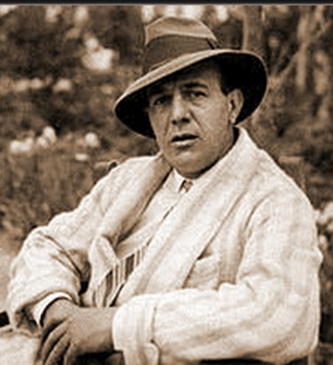
IGNACIO Sanchez first saw the light of day in Sevilla on 6 June 1891, and later married into a bullfighting dynasty.
Apart from those two things, he was not at all a typical matador.
Unusually for a ‘torero’, he had brains. And whereas the normal way to proceed is to make your name in Andalucia, then make your money in South America, Ignacio did it in reverse.
In 1910 he stowed away on a cargo ship, landed in Mexico (he was 19 years old) and became a matador. Then he set about conquering Spain.
Ignacio Sanchez Mejias was a poet and a screenwriter.
As an author, he got to know the young genius of Granada, Federico Garcia Lorca.
And he married the sister of Rafael and Jose Ortega, bullfighting’s two biggest stars.
In a ‘mano a mano’ (friendly duel) with Jose in Talavera de la Reina in 1920, he had the misfortune to watch his brother-in-law being gored to death.
Ignacio kept retiring, but coming back. The crowds clamoured for him.
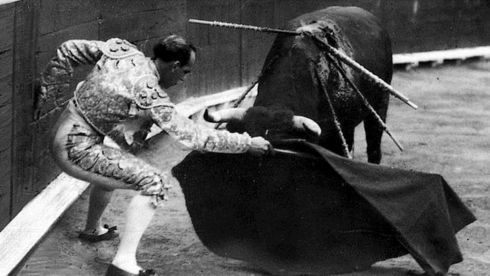
He performed a spectacular (and extremely dangerous) pass, sitting on the narrow wooden railing. It was his trademark.
The series of odd circumstances which ended with Ignacio fighting a bull in Manzanares in August 1934 was bizarre, to say the least.
At 43, he was too old. His friends told him so. He swore that the season which was ending would definitely be his last.
Another bullfighter dropped out of the Manzanares corrida, because of a sudden family bereavement, and asked Ignacio to replace him.
It was against Ignacio’s principles to appear at a bullring which didn’t offer a first-class infirmary, and he agreed to fight only if an ambulance was on standby to take him to Madrid, if injured.
As he launched his ‘barrier pass’, the bull gored him in the thigh.
His ambulance was in such poor condition that it broke down.
He didn’t reach the Madrid hospital until the following morning – by which time it was too late.
One good thing came out of the tragic death of Ignacio Sanchez Mejias.
Hie friend Lorca wrote a tribute to him: it remains, 92 years after the incident, one of the most beautiful poems in the Spanish language.
7 JUNE, 1968 – ETA MURDERS ITS FIRST GUARDIA CIVIL OFFICER
The Basques, the ethnic group who inhabit the extreme north-east of Spain, are famous for being fiercely independent.
For centuries, they have been trying to break away from Madrid’s control.
The 1960s and 1970s saw a surge in political violence all over Europe (the IRA in Ireland, Bader-Meinhof in Germany, the Red Brigades in Italy).
Basque separatism organised itself around ETA (Euskadi Ta Askatasuna = ‘Basque Homeland and Liberty’), a society which demanded independence.
On 7 June, 1968, the protest turned lethal.
READ MORE: 12 silly laws in Spain that’ll leave you baffled (and possibly fined)

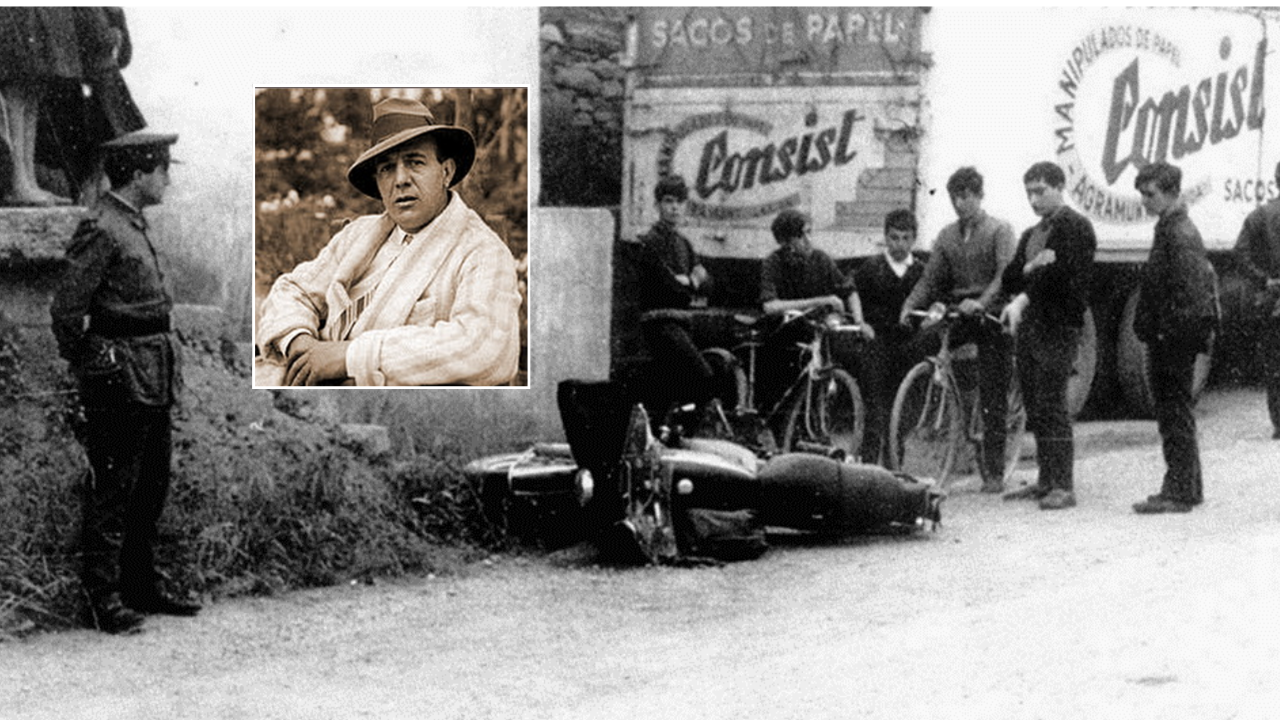
On a local road between Aduna and Villabona, just south of San Sebastian, a Guardia Civil motorcyclist – Jose Antonio Pardines Arcay – was assassinated.
It was the first of 850 deaths in the ‘armed struggle’ which ended in 2018.
Two Basque terrorists, Javier Etxebarrieta and Iñaki Sarasketa, were driving around in a white SEAT 850 coupé.
They committed some minor traffic violation, and Officer Pardines followed them and stopped them.
When he approached the vehicle and asked to see their documents, Etxebarrieta shot him in the face.
A passing truck driver tried to disarm the perpetrator, but they got away. Pardines – the dead man – was 25 years old.
A few hours later, in Tolosa, a Guardia Civil patrol cornered the ETA men and a shoot-out ensued.
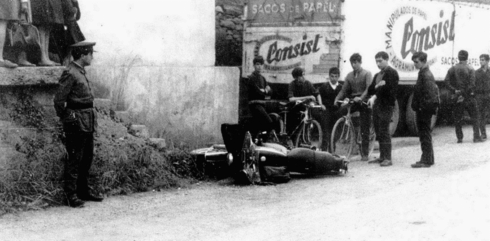
Etxebarrieta was killed. Sarasketa escaped, but was caught the following day.
The ‘Good Samaritan’ truck-driver, Fermin Garces, died as recently as four years ago, a decorated hero.
An obvious target for separatist violence, the Guardia Civil is seen as a symbol of Madrid’s authority.
Easy to recognise in their green uniforms and distinctive ‘bicorn’ helmets, the Guardia are a rural police force with military leanings.
The Policia Nacional (navy blue uniforms) answer to the Spanish Home Office, but the Guardia Civil take their orders from the Ministry of Defence.
Click here to read more Spain News from The Olive Press.